

Table Of Contents
Horses have been a much-loved companion of humans for centuries, helping us perform a wide variety of everyday tasks easier and faster. Horses have been used to carry people and supplies to far-off lands, aid us in hunting, and even ridden to war.
Nowadays, horses are still used for riding and transportation, but the main reason why most people (at least in the western world) have horses is for pleasure; horse riding, competitions, and horse-related sports like showing and racing have dominated the average horse’s lifestyle.
Horses are our friends, and if you own a horse, you have a responsibility to care for him and provide the right combination of food, shelter, and exercise to keep your horse healthy and happy.
Unfortunately, like all animals, there are risks to a horse’s health that can occur if they are not taken care of properly. Laminitis is one of those horse diseases that can cause lifelong issues for your horse, and it’s a rather common disease.
According to recent research, the risk of your horse getting laminitis is about 15%, which is a pretty stark statistic for the average horse. Let’s explore more about laminitis in horses and how you can recognize the early signs of this painful disease, as well as how you can work to prevent it from happening altogether.
Key Takeaways
-
Laminitis is a serious and painful hoof disease caused by inflammation of the laminae (the tissue connecting the coffin bone to the hoof wall), which can lead to permanent structural damage or disability if not caught early.
-
Early warning signs include hoof heat, a bounding digital pulse, weight shifting, and the characteristic sawhorse stance; prompt veterinary intervention is critical, as the window between a manageable episode and irreversible damage is narrow.
-
Prevention requires a coordinated system of dietary management (low-NSC forage, controlled pasture access, weight management), consistent exercise and hoof care, proactive metabolic screening, and targeted supplementation such as TRI-ACTA H.A. to support connective tissue integrity and reduce systemic inflammation.
Introduction to Laminitis in Horses
Horse laminitis is a serious disease that causes extreme pain and can permanently cripple a horse if left untreated. It is also one of the most common causes of a lame horse, particularly in cases where the disease has been allowed to progress.
Because horses are almost always on their feet, the coffin bone (located inside the hoof capsule and covered by a sensitive soft tissue called the corium) bears the brunt of that constant load. The corium is comparable to the "quick" of a human fingernail: highly sensitive and responsible for delivering blood flow and nutrition to the hoof. The coffin bone is anchored to the hoof wall by two layers of tissue called the laminae, which work together with the surrounding hoof structures to support the horse's weight and allow normal movement. When those laminae become inflamed and compromised, the entire weight-bearing system breaks down, and that is the foundation of what laminitis does.

When laminitis in horses occurs, then those sensitive laminae become inflamed, causing the horse to experience pain in his hooves.
What is Laminitis in Horses?
The laminae of a horse’s hoof are actually two layers: the first layer is called the “sensitive lamina” and is what is attached to the coffin bone. The second layer is called the “insensitive lamina” and is attached to the hoof wall. The two layers are interlocked together with finger-like projections, which is what keeps them in place.
Laminitis occurs when one or both of the laminae become inflamed. Since the majority of a horse’s weight is put on its front limbs, laminitis commonly affects the front hooves. In severe cases, one or more of the layers of laminae can separate from where they are attached, causing the coffin bone to sink or rotate downwards.
Below is a diagram comparing a healthy horse hoof to one that’s afflicted with laminitis.

Early Signs of Laminitis in Horses
Laminitis rarely announces itself all at once. More often, it creeps in through subtle physical cues that are easy to dismiss until they escalate into major issues. Knowing how to identify these earliest signs can mean the difference between a horse that recovers fully and once that never quite returns to form.
1. Heat in the Hooves
One of the first and most reliable warning signs of laminitis in horses is abnormal warmth in the hooves, particularly at the toe. Run your hand along the hoof wall and coronary band. If you feel some warmth, that’s normal, especially after your horse has been working, but heat that’s persistent, localized, and present even at rest can be a sign of active inflammation in the laminar tissue (the interlocking structure that suspends the coffin bone within the hoof capsule). Both front feet are typically affected, since the forelimbs bear the majority of the horse’s body weight.
2. Digital Pulse Changes
An elevated or "bounding" digital pulse is one of the most telling early indicators of laminitis. You can feel it by pressing two fingers against the digital artery running along the back of the fetlock, just above the hoof. In a healthy horse at rest, the pulse is faint and barely perceptible. In a horse developing laminitis, that pulse becomes noticeably stronger, sometimes described as a pounding or throbbing sensation. Checking digital pulses regularly as part of your routine handling is one of the simplest ways to catch trouble early.
3. Reluctance to Move or Shift Weight
A horse in early stages of laminitis will often become visibly reluctant to move. You may notice hesitation to walk on hard ground, shortened strides, or outright refusal to pick up a hoof, particularly if it means loading weight on the opposite foot for any length of time. Stall-kept horses may also begin shifting their weight from foot to foot, a sign that sustained pressure on the inflamed tissue is causing discomfort. This behaviour is sometimes chalked up to stiffness or a sore back, which is why it’s important to consider it alongside the other signs on this list.
4. Stance Changes (The "Sawhorse" Stance)
As laminitis progresses (even if it’s technically still in the early stages), horses often adopt a characteristic posture to redistribute weight away from painful front feet. They often push their hind limbs forward and under the body while simultaneously extending the front limbs outward, creating the appearance of a sawhorse or a horse bracing against a slope.

An image showing a horse in the “sawhorse stance” position. Source
If you notice this stance, particularly in combination with any of the signs described above, it’s important to treat it as urgent. By the time a horse is actively compensating with its posture, the inflammatory process in the affected joint is already well underway.
General Signs and Symptoms of Laminitis in Horses
Understanding laminitis symptoms requires thinking in two timeframes: what you see during an active episode and what the condition leaves behind when it becomes a long-term problem. Both matter, and confusing one for the other can lead to mismanaged care.
Acute vs. Chronic Laminitis: How the Symptoms Differ
|
Acute Laminitis |
Chronic Laminitis |
|
|
Onset |
Rapid, often within hours of a trigger |
Develops over time from repeated or unresolved acute episodes |
|
Key Symptoms |
Intense pain, pronounced lameness, hoof heat, bounding digital pulse, sawhorse stance |
Subtle lameness, behavioral changes, reluctance on hard ground; pain flare-ups possible |
|
Structural Changes |
None yet—laminar tissue is inflamed but intact |
Coffin bone displacement, compromised laminar tissue, visible hoof capsule changes |
|
Risk of Misdiagnosis |
Low—signs are hard to miss |
Higher—often attributed to age, stiffness, or attitude |
|
Treatment Goal |
Limit further laminar damage as rapidly as possible |
Manage permanent structural changes and prevent further progression |
|
Prognosis |
Full recovery possible with prompt intervention |
Permanent changes likely; management becomes the long-term focus |
Lameness Scoring and Observable Gait Changes
Veterinarians typically use the American Association of Equine Practitioners (AAEP) lameness scale (this link has a download to the resource that you can use), which is a five-point system ranging from 0 (no detectable lameness) to 5 (non-weight-bearing) to document and track progression. In laminitic horses, you'll most commonly see presentations in the Grade 2 to Grade 4 range during active episodes.
What this looks like from the ground:
-
At Grade 2, the horse moves with a shortened, choppy stride and may favour hard surfaces. The gait abnormality is consistent and visible at a trot but might be subtle enough at a walk that an inexperienced observer could miss it.
-
By Grade 3, lameness is obvious at both the walk and trot. The horse moves reluctantly, often with exaggerated heel-to-toe landing to offload the painful toe region, or may refuse to move at all on certain surfaces.
-
Grade 4 and above means the horse is in significant distress and, as a result, is usually unwilling to move, possibly non-weight-bearing on one or more limbs, and in need of immediate veterinary attention.
Outside of formal scoring, pay attention to any unexplained change in how your horse moves on different terrain. A horse that used to stride out confidently on packed gravel or pavement but now picks its way across cautiously is telling you something.
Hoof Wall Changes and Growth Ring Irregularities (Chronic)
The hooves of a chronically laminitic horse are a record of what's happened internally. Two of the most telling external signs are divergent growth rings and hoof wall deformation.
Growth rings (the horizontal lines that circle the hoof wall) are present on all horses to some degree, reflecting fluctuations in nutrition and season. In a laminitic horse, these rings become irregular and divergent: they spread wider apart at the heel than at the toe. This asymmetry reflects the fact that the toe region has been under chronic inflammation and mechanical stress, slowing hoof growth at the front while the heel continues to grow at a more normal rate. The wider the divergence, the more significant and prolonged the disruption.
Hoof wall deformation, sometimes called a "laminitic hoof" or "founder feet," can develop over time as the internal structures shift. The toe may appear dished or concave rather than straight when viewed from the side, the white line (the junction between the hoof wall and sole) may appear widened or stretched, and the sole may appear flatter or even convex (a condition called "dropped sole") in cases where significant coffin bone rotation has occurred.
These changes develop over weeks to months and are most obvious in horses with a history of repeated laminitic episodes. If you're assessing a horse you didn't raise, these hoof characteristics are worth flagging to your farrier and vet, as they provide important context for the animal's history.
Behavioural Signs: Reluctance to Turn, Sensitivity to Hard Ground

Horses can't tell you they're in pain, but their behaviour can. Beyond the postural changes covered earlier, watch for these subtler behavioral signals:
-
Reluctance to turn in tight circles. Laminitic horses find turning painful because it requires loading the outer edge of the hoof wall unevenly. A horse that was previously cooperative about lunging, leading, or working in tight spaces but suddenly resists or moves stiffly through turns is worth a closer look.
-
Surface sensitivity. A horse that walks willingly on soft surfaces like grass or sand but shortens its stride noticeably or refuses to move freely on hard-packed dirt, gravel, or pavement is likely experiencing toe pain. The firmer the surface, the more it amplifies the pressure on inflamed laminar tissue.
-
Unusual stall behaviour. Spending more time lying down than usual, reluctance to come forward to a feed bucket, or standing persistently at the back of a stall with weight shifted to the hind end can all be early behavioural indicators, particularly if the horse has no history of these habits.
-
Sensitivity to hoof testers or manual pressure. During handling, a horse that flinches or pulls away when you apply pressure to the sole or toe area with your hands is showing you localized pain.
When to Call Your Vet
Laminitis is a veterinary emergency when it's acute, and it requires professional management when it's chronic. There is no scenario where it's appropriate to simply monitor and hope.
Call your vet immediately if:
-
Your horse is showing Grade 3 lameness or higher (visible distress walking, unwillingness to move, or non-weight-bearing)
-
You detect a strong, bounding digital pulse in combination with hoof heat and behavioural changes
-
Your horse has adopted the sawhorse stance for any sustained period
-
You know or suspect a triggering event has occurred (e.g., pasture overconsumption, grain overload, a metabolic episode, or a sudden feed change), and any lameness or hoof heat follows within 24–48 hours
Schedule an urgent (same-day or next-day) appointment if:
-
You're seeing Grade 1–2 lameness that's new and unexplained, especially alongside any hoof heat or pulse changes
-
Your horse has a known history of laminitis, and you're seeing behavioral signs or posture changes that pattern-match to previous episodes
-
You've noticed new or widening growth ring divergence or hoof wall changes you haven't had assessed
For horses with confirmed chronic laminitis, regular farrier and veterinary collaboration is essential to manage the condition effectively. Trimming schedules, therapeutic shoeing, diet, and any appropriate supplementation should all be coordinated and reviewed on a consistent timeline.
The sooner a laminitis episode is professionally assessed, the more treatment options remain available. Structural damage to the hoof is largely irreversible, but if it’s caught early, it's often preventable.
What Causes Laminitis in Horses?
Though research is ongoing, it is believed that the biggest causes of laminitis in horses are Equine Metabolic Syndrome (EMS) and Cushing’s disease. Poor nutrition, including dehydration, is another reason why laminitis in horses occurs.
The different causes of laminitis in horses are identified in the following table:
|
Causes of Laminitis in Horses |
How to Identify |
|
Nutrition-induced laminitis |
Caused by fermentation of a large number of carbohydrates in the hindgut (fructans from grass or starch from grains) from excessive consumption |
|
Infection or sickness |
Laminitis can occur as a secondary result of infection or sickness, such as diarrhea, retained placenta, and certain respiratory infections. |
|
Obesity |
Obesity can cause a variety of conditions that can lead to laminitis in horses, such as equine metabolic syndrome (insulin resistance caused by being overweight) |
|
Trauma |
Repeated physical trauma to the hooves (from horses being “ridden too hard”, for instance) can aid in the development of laminitis in horses. |
|
Equine Pituitary Pars Intermedia Dysfunction (Cushing's disease) |
Can lead to laminitis due to the hormonal imbalances associated with this disease |
|
Steroids |
Though there is no specific scientific evidence to support this, there have been instances where steroid injections have appeared to cause the onset of laminitis in horses |
Table sources: Pubmed, thehorse.com, aaep.org
To summarize, laminitis in horses can be caused by a variety of factors, including diet, as a secondary result of disease, obesity, trauma, and steroid medications. It can be difficult for a horse owner to pinpoint the exact cause, but your vet may be able to help you identify other issues with your horse and help you see the relationship between those issues and laminitis. Treating horse laminitis requires a complete understanding of the animal’s history and the conditions that led up to them developing their current grade of the condition.
How to Prevent Laminitis in Horses

Preventing laminitis in horses is where owners have the most leverage. Once laminitis has caused structural damage, the conversation shifts from recovery to damage control, but with the right protocols in place, many horses never reach that point. Effective prevention isn't a single intervention; it's a system of overlapping strategies covering diet, exercise, hoof care, metabolic health, and nutritional support. Gaps in any one area will eventually show.
That system starts with understanding what type of laminitis your horse is most at risk for, because the triggers, and therefore the solutions, differ considerably by category.
Understanding the Types of Laminitis
Not all laminitis is the same condition. Grouping every case under one umbrella leads to generic prevention strategies that miss the actual risk. Here's how the major types break down:
Pasture-Associated Laminitis is the most common form and the one that most frequently catches owners off guard. Lush pasture, particularly in spring and fall, is high in non-structural carbohydrates (NSCs), including fructans. When a horse consumes NSCs faster than its digestive system can process them, the overflow ferments in the hindgut, triggering systemic inflammation that reaches the laminar tissue. Easy keepers, ponies, and metabolically prone horses are at the highest risk, but no horse is entirely immune with unrestricted access at the wrong time of year.
What makes this type particularly frustrating is that the dangerous grass looks no different from the safe grass two weeks prior. Fructan content is invisible, driven by temperature, light levels, and growth rate rather than how lush the pasture appears.
Supporting Limb Laminitis has nothing to do with diet and everything to do with mechanics. When a horse is non-weight-bearing on one limb due to injury or post-surgical recovery, the opposite limb compensates by bearing a disproportionate load over an extended period. The sustained stress compromises blood flow in the laminar tissue of the supporting foot, causing laminitis in an otherwise healthy hoof. Because clinical focus naturally falls on the injured limb, the supporting foot often receives little preventive attention until damage is already underway.
Endocrine/Metabolic Laminitis is driven by hormonal dysfunction. Equine Metabolic Syndrome (EMS) produces chronically elevated insulin that directly damages laminar vasculature, even without a high-sugar dietary event. Pituitary Pars Intermedia Dysfunction (PPID), commonly called Cushing's disease, creates a parallel vulnerability through disrupted cortisol regulation, making affected horses significantly more susceptible as the disease progresses. A meaningful percentage of horses with recurrent or unexplained laminitis have undiagnosed EMS or PPID driving their episodes. Treating the underlying hormonal condition is a prerequisite for effective prevention in these animals.
Road Founder / Concussive Laminitis results from repeated work on hard surfaces (pavement, packed gravel, frozen ground) without adequate hoof support or recovery time. Mechanical concussion accumulates over time, creating chronic laminar inflammation. This type is frequently misread as general training soreness before the hoof connection is made. Prevention is primarily mechanical: correct trimming and shoeing, appropriate footing selection, and managed workloads.
Knowing which category applies to your horse tells you exactly where to focus your prevention efforts. A metabolic horse needs dietary and endocrine management. A performance horse on hard ground needs a hoof care and footing strategy. A horse on prolonged stall rest needs proactive monitoring of its supporting foot. The protocol that protects one may do very little for another, and many horses carry risk from more than one category at the same time.
Diet and Pasture Management
For the majority of laminitis-susceptible horses, what goes into the feed bucket and what's available in the pasture is the single most controllable risk factor. It is also where many well-intentioned owners make preventable mistakes, often because the dangerous inputs don't look dangerous.
Choose Low-Nsc Forage as Your Foundation
Horses at risk for laminitis should be maintained primarily on grass hay with a tested NSC content below 10–12%. Not all hay is created equal, however. NSC levels vary significantly by:
-
Cutting number (first-cut hay is often higher in NSCs than later cuttings)
-
Species (timothy, Bermuda, and orchard grass are generally lower in NSCs than legume hays like alfalfa or clover, though significant variation exists within species)
-
Harvest time (hay cut in the afternoon, after a full day of photosynthesis, will be higher in sugar than hay cut in the early morning)
-
Curing conditions and storage
These differences are invisible once the hay is baled, which is why forage testing through your vet or an agricultural laboratory is worthwhile for any horse with metabolic risk factors. A low-quality alfalfa may test lower in NSCs than a high-sugar timothy, depending on when and where it was grown. Test, don't assume.
Soak Hay When Forage Testing Isn’t Available or Values Are Borderline
Soaking hay in cold water for 30–60 minutes leaches a significant portion of the water-soluble sugars, reducing NSC content meaningfully. Keep these practical points in mind:
-
Use cold water, not warm, because warm water is less effective at sugar extraction
-
Soak for a minimum of 30 minutes; 60 minutes is preferable for higher-NSC hay
-
Drain and discard the soaking water; do not allow horses to drink it
-
Soaking removes some vitamins and minerals alongside the sugars, so it's a management tool, not a permanent substitute for tested low-NSC forage
-
Fat-soluble carbohydrates are unaffected by soaking, so this method has limits
Manage Pasture Access With Precision, Not Approximation
Fructan levels in grass peak during cool nights followed by bright, sunny days, which is a pattern common across most of North America in spring and fall. Grass produces carbohydrates through photosynthesis during the day but cannot use them efficiently for growth when nighttime temperatures drop below approximately 4.4–10°C (40–50°F), causing carbohydrate accumulation in the plant tissue that persists into the following morning and beyond.
Restrict or eliminate pasture access during these high-risk windows:
-
Overnight frost or any period of freezing temperatures
-
Drought stress (water-stressed plants concentrate carbohydrates)
-
Rapid spring growth flush
-
Post-storm recovery growth
-
Cool, sunny days following cold nights, even if the grass looks normal
For lower-risk horses, early morning turnout before photosynthesis has had time to build carbohydrate stores throughout the day is generally safer than afternoon grazing. Two additional tools worth implementing for horses that don't tolerate full confinement:
-
Strip grazing: Limit the horse to a small section of pasture at a time using electric fencing. Controls intake without eliminating the psychological and physical benefits of being outside.
-
Grazing muzzle: A properly fitted muzzle reduces grass intake by approximately 30–80% while still allowing movement, herd interaction, and turnout time. Check the fit regularly, because a muzzle that rubs or prevents the horse from drinking freely will not be tolerated consistently.
Approach Grain With Significant Skepticism for At-Risk Horses
Grain is rarely necessary for laminitis-susceptible horses and is frequently the source of preventable episodes. If your horse is in light to moderate work and receiving adequate, tested forage, additional concentrate is often simply excess digestible energy. If a concentrate is nutritionally necessary for conditioning, performance demands, or to meet vitamin and mineral requirements not covered by forage, follow these guidelines:
-
Choose a low-starch, low-NSC formulation designed for metabolic horses
-
Feed in small, divided meals (twice or three times daily) rather than a single large feeding—a large grain bolus overwhelms the small intestine's capacity and increases the likelihood of hindgut fermentation of undigested starch
-
Avoid sweet feeds and high-molasses products entirely
-
Avoid concentrates that list corn, wheat, or barley high on the ingredient list, as these are rapidly fermentable carbohydrate sources with no place in a laminitis-prevention diet
Prioritize Weight Management as the Foundation of Every Other Dietary Intervention
Overweight horses, particularly those carrying excess fat deposits at the crest of the neck, behind the shoulder, around the sheath or mammary gland, or around the tailhead, are at substantially elevated laminitis risk regardless of what they're eating at the moment. These regional fat deposits actively produce adipokines, including inflammatory signaling molecules, that disrupt insulin sensitivity and prime the laminar vasculature for damage. A horse that is overweight is a horse whose laminitis threshold is lower.
Key principles for weight management in at-risk horses:
-
Target a body condition score of 4–5 on the Henneke scale; for metabolic horses, err toward the lower end of that range
-
Weight loss should be gradual, approximately 0.5–1% of body weight per week, to avoid triggering hyperlipemia, particularly in ponies and donkeys
-
Work with your vet or an equine nutritionist to design a calorie-restricted plan that still meets nutritional requirements
-
Monitor regional fat deposits specifically, because a horse with a moderate overall BCS but a pronounced cresty neck may still carry significant metabolic risk
Exercise and Hoof Care Protocols
-
Consistent, appropriate exercise is extremely important for metabolic management in horses. For horses with EMS or PPID, regular movement improves insulin sensitivity and supports healthy weight maintenance. Consistency is important: sporadic intense work is harder on the metabolic system than steady, moderate activity. During acute laminitis episodes or active pain flares, exercise should stop entirely and veterinary guidance should dictate return-to-work timelines. Outside of those periods, keeping a metabolic horse in regular, appropriate work is protective, not risky.
-
Regular farrier visits are non-negotiable. The goal of a proper trim in a laminitis-susceptible horse is to maintain a correct hoof-pastern axis, provide adequate breakover at the toe, and minimize mechanical stress on the laminar tissue. Long toes and low heels, which is a common hoof imbalance, increase the leverage on the coffin bone and amplify laminar stress with every step. How frequently your horse needs to be seen depends on growth rate and hoof type, but six to eight weeks is a standard interval, and horses with a history of laminitis or active structural changes may need more frequent attention. Your farrier and vet should be communicating directly.
-
Avoid hard ground during high-risk periods. If your horse is showing early warning signs, has recently had a dietary slip, or is in the middle of a high-risk seasonal window, limit or eliminate work and turnout on hard-packed, rocky, or frozen footing. The concussive load on already-susceptible laminar tissue can tip a subclinical situation into an acute episode.
Monitoring Metabolic Health
-
Screen for EMS and PPID proactively. Both conditions are significantly more common than many owners realize, and both can be present for a considerable time before clinical signs become obvious. Annual blood panels that include baseline insulin, glucose, and ACTH levels are a reasonable standard of care for any horse over 15, any easy keeper, or any horse with a history of laminitis. Diagnosing and managing an underlying endocrine condition is one of the highest-leverage interventions available for preventing recurrence.
-
Use body condition scoring consistently. As we mentioned before, a score of 4–5 on the Henneke Sacale is generally considered ideal for most horses; laminitis-susceptible horses are typically safer toward the lower end of that range. Regularly assessing BCS ( ideally monthly) gives you an objective, early-warning metric that doesn't rely on subjective impressions of whether a horse "looks heavy."
-
Know your horse's risk profile. The horses that need the most vigilance share recognizable characteristics such as cresty neck, regional fat deposits, easy weight gain on modest forage, history of any laminitis episode, age over 15, pony or draft breed, or a confirmed EMS or PPID diagnosis. If your horse fits two or more of these descriptors, prevention protocols should be built into your daily management routine.
Joint and Hoof Supplements for Laminitis Prevention

Dietary management and veterinary oversight lay the foundation for laminitis prevention, but targeted supplementation can meaningfully reinforce that foundation, particularly for horses with metabolic risk factors or demanding performance schedules.
MSM and Systemic Inflammation
MSM (methylsulfonylmethane) is one of the most important ingredients to consider in the context of laminitis prevention. Chronic, low-grade systemic inflammation is a documented contributor to laminitis susceptibility. It primes the laminar vasculature for the kind of acute inflammatory response that triggers an episode. MSM works directly at this level, reducing systemic inflammation and the oxidative stress that accompanies it. For horses that are metabolically at risk, keeping systemic inflammation in check between episodes is a meaningful protective measure, not just a comfort consideration.
Glucosamine, Chondroitin, and the Connective Tissue of the Hoof
The laminae are connective tissue in the hoof. Glucosamine and chondroitin are the foundational ingredients for connective tissue integrity throughout the body, and the hoof laminae are no exception.
Glucosamine drives the production of proteoglycans, the structural proteins that form the matrix of healthy connective tissue. Without adequate proteoglycan production, that tissue becomes less resilient and more susceptible to the mechanical and inflammatory insults that trigger laminitis. Chondroitin complements this by inhibiting the destructive enzymes that degrade the connective tissues, which effectively protects the structural gains that glucosamine supports.
For horses already managing metabolic conditions or performing at high levels, maintaining connective tissue quality in the hoof isn't a luxury. It's a direct contributor to how well the hoof withstands the stresses that would otherwise initiate laminar breakdown.
TRI-ACTA H.A. as a Daily Preventive
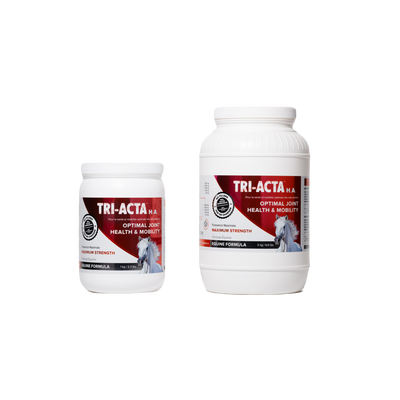
For horses with metabolic risk factors, a laminitis history, or regular competition demands, TRI-ACTA H.A. provides connective tissue support and joint lubrication in a single, concentrated daily formula.
The formula combines glucosamine sulfate and glucosamine HCl (two complementary forms: HCl for bioavailability, sulfate for tissue strength), chondroitin, MSM, and hyaluronic acid to lubricate synovial fluid and reduce mechanical joint stress during work. With 100% active, pharmaceutical-grade ingredients and no fillers, the dose is small and concentrated, which matters practically for horses already receiving multiple dietary interventions.
TRI-ACTA H.A. is fully compliant for FEI competition horses, meaning equine athletes can use it daily year-round without concern about prohibited substance violations.
It's also worth being clear about what TRI-ACTA is and isn't doing here. Standalone anti-inflammatories manage inflammation after it's already present. TRI-ACTA addresses the underlying connective tissue degeneration that makes horses vulnerable to laminitis in the first place, supporting the structural integrity that your dietary and management strategies are working to protect.
Our maximum strength formula is perfect for horses that are ageing, experiencing arthritis and stiffness, are in training and competition, or under a heavy workload.
TRI-ACTA H.A. for Equine
Laminitis in Horses Q&A

Can laminitis in horses be cured?
Oftentimes, laminitis in horses cannot be cured, which is why prevention, along with early detection and management of the disease is so important.
If careful attention is paid to diet, farriery, and the areas in which the horse is walking on, then the disease can be managed effectively. It’s also important to understand what originally caused the laminitis, and whether that cause has a solution or whether it has to do with the horse’s genetic makeup.
What is the best supplement for a horse prone to laminitis?
For horses prone to laminitis, the most effective supplement is one that works on multiple fronts simultaneously, addressing both the connective tissue integrity of the hoof laminae and the systemic inflammation that makes susceptible horses vulnerable in the first place.
TRI-ACTA H.A. does exactly this. Its formula combines dual-form glucosamine (sulfate and HCl) to support proteoglycan production and connective tissue repair, chondroitin to inhibit the destructive enzymes that degrade the laminar matrix, MSM to reduce systemic inflammation at the source, and hyaluronic acid to lubricate joints and reduce the mechanical inflammatory load that accumulates with regular work.
Is laminitis in horses painful?
Yes, significantly so, and in ways that are easy to underestimate from the outside. The pain originates in the laminar tissue, which becomes severely inflamed during an acute episode. Because this tissue is enclosed within the rigid hoof wall with nowhere to expand, the pressure buildup intensifies the pain considerably.
Horses in acute laminitis are essentially standing on inflamed, compressed tissue with every pound of their body weight. The behavioural signs reflect that severity: the sawhorse stance, reluctance to move, bounding digital pulse, and in serious cases, complete refusal to bear weight. Horses that appear stoic (and many do, because prey animals instinctively suppress visible pain signals) are not necessarily in less pain.
Can a horse with laminitis ever return to full work?
It depends on the severity of the episode and how much structural damage occurred. There is no blanket answer, and any confident yes or no without knowledge of the individual horse's radiographic findings should be treated with skepticism. Horses that experienced a mild to moderate acute episode with no significant coffin bone rotation, and that received prompt veterinary care and correct hoof management throughout recovery, can absolutely return to full work. Many do, with no lasting limitation, provided the underlying trigger has been identified and eliminated.
For horses with significant coffin bone rotation, dropped sole, or repeated episodes resulting in chronic structural changes, the prognosis is more guarded. A return to some level of work is often achievable, but permanent laminar and bony changes may set a ceiling on what's safely possible. Radiographic assessment is the most reliable guide, as external hoof appearance alone does not tell the full story.
In all cases, return-to-work decisions should be made with your veterinarian, based on imaging and pain response rather than a fixed timeline or the horse appearing sound to the eye. Premature return is one of the most common causes of relapse and long-term setback.
What is a new treatment for laminitis in horses?
A recent development for treatment for lamininitis in horses emerged in late 2024, when a study published in the peer-reviewed journal Frontiers in Microbiology showed promising results for a new drug called methylated tirilazad (product name PTP-102, manufactured by Byrock Technologies Ltd.). The study found that treatment resulted in significant improvement in clinical signs, blood markers, and lamellar tissue damage. Researchers found that matrix metalloproteinases are strongly associated with the development of laminitis, and methylated tirilazad has shown a role in repairing laminar tissue. As with Velagliflozin, further research is needed before this becomes a standard treatment option.
In the meantime, the most effective tools for managing and preventing laminitis remain a combination of supplementation, veterinary oversight, pasture management, consistent hoof care, and targeted nutritional support.
Is there a natural treatment for laminitis in horses?
There is no natural treatment that replaces veterinary care for an active laminitis episode, and any approach that claims otherwise should be treated with caution. Acute laminitis is a medical emergency, and the first priority is always professional assessment, pain management, and reducing further laminar damage under veterinary guidance.
That said, natural and nutritional interventions play a meaningful role in both long-term management and prevention, particularly for horses with chronic laminitis or ongoing metabolic risk.
Dietary management is the most impactful natural treatment for laminitis in horses available. Restricting access to high-NSC pasture, feeding tested low-sugar hay, eliminating grain where possible, and achieving a healthy body condition score all reduce the systemic conditions that make laminitis episodes more likely.
Targeted supplementation with TRI-ACTA H.A. supports this foundation at the tissue level. MSM addresses the chronic systemic inflammation that primes susceptible horses for laminar episodes. Glucosamine and chondroitin support the connective tissue integrity of the hoof laminae, helping maintain the structural resilience that laminitis degrades over time. Hyaluronic acid provides additional lubrication to allow for easier overall movement. Together, these ingredients work on the root cause of laminar vulnerability rather than simply managing symptoms after the fact.
Summary

Although laminitis in horses is a common disease, it’s much more than a natural part of an ageing horse: it’s a chronic condition that can be caused by poor diet, a horse that has been worked too much, or as a secondary result from a genetic disease, Equine Metabolic Syndrome or Cushing’s disease.
Proper treatment of laminitis in horses is essential to keep your horse happy, healthy, and pain-free. Most treatment options for laminitis in horses have to do with diet control, pain management, and appropriate farriery care.
Any step that you can take to prevent your horse from developing laminitis will only prove to be beneficial in the long run. One of the ways you can start the prevention process is by incorporating supplements into your horse’s diet to ensure he is getting enough of the essential vitamins and minerals he needs to maintain good health.
TRI-ACTA is a great option for younger horses, while TRI-ACTA H.A. is a more robust option for older horses, competition horses, or horses that perform a lot of work. It includes hyaluronic acid, which has additional therapeutic effects that support your horse’s health.
Purchase TRI-ACTA or TRI-ACTA H.A. online or learn where to buy at a store near you.
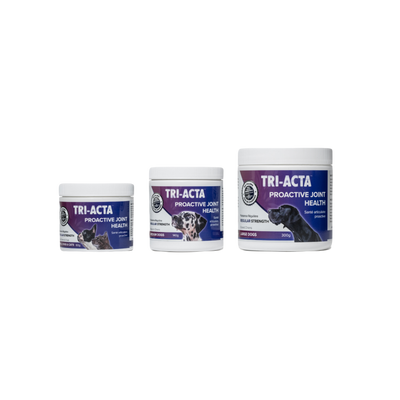
A proactive approach for developing and younger adult pets to maintain optimal joint health mobility, minimize inflammation and fend off age-related ailments.
TRI-ACTA for Pets
Share this post:



Proactive & Therapeutic Joint Supplements

When given daily, Integricare joint supplements recover bone and joint injuries faster and help prevent mobility injuries from happening in the first place.