

Table Of Contents
If you've ever tried to give a cat a pill, then you’ve experienced what it’s like when your cat legitimately thinks you're trying to kill them rather than help them, which, of course, couldn’t be further from the truth, of course, but your cat doesn’t understand that.
What looks straightforward on paper (open mouth, insert pill, done) can quickly turn into an ordeal ending with a scratched hand at best, bites and huge gashes on your arms at worst, a ruined tablet, and a very smug cat.
You're not doing it wrong. Cats are just genuinely difficult to medicate, and that's something every owner eventually discovers firsthand.
But with the right technique, a little preparation, and some knowledge of your options, giving a cat a pill can become much more manageable.
This guide covers every method, from the easiest tricks to the more advanced strategies for truly difficult cats, so you can find the approach that works for yours.
Key Takeaways
-
There are several methods for how to give a cat a pill, from hiding it in food to manual pilling. The right one depends on your cat's temperament and the medication type.
-
Not all pills can be crushed or capsules opened; always check with your vet before altering the format of any medication.
-
Tools like pill guns, pill pockets, and follow-up syringes of water make the process safer and more reliable.
-
For difficult or aggressive cats, compounding medications into a transdermal gel is often the most practical long-term solution.
-
For ongoing daily supplementation, a cat supplement powder mixed into food is the lowest-stress option.
Before You Start: What You Need to Know About Cat Medications
Before you try any pilling method, it helps to understand what you're working with.
According to a 2025 study published in the Journal of Veterinary Internal Medicine, 39% of cat owners failed to complete their cat's prescribed medication course, with the most commonly cited reason being a resistant pet.
A separate survey found that 10% of owners described their cat as simply impossible to medicate.
In many cases, the challenge with learning how to give a cat a pill has less to do with the medication itself and more to do with stress, taste aversion, restraint, and repeated negative experiences around dosing.
Once a cat starts associating medication time with discomfort or fear, even simple routines like bringing out a pill bottle or picking them up can trigger avoidance behaviours.
Not all medications come in every format, and the format matters for both efficacy and strategy and is an important part of managing your cat's overall health.
Knowing your options upfront also means you can have an informed conversation with your vet about whether an easier delivery format might be available for your cat's specific medication.
Pills vs. Capsules vs. Liquid vs. Powder
Each medication format has its own strengths. Some medications are only available in one form, while others offer flexibility you can use to your advantage.
-
Pills (tablets): The most common format. Solid, compact, and can sometimes be split or crushed depending on the medication.
-
Capsules: A gelatin shell containing powder or pellets. Slicker and often larger than tablets, which can make manual administration harder.
-
Liquid medications: Measured by syringe and given into the side of the mouth. Useful for cats who can't swallow pills, but technique matters.
-
Powders: Mixed directly into food. The easiest format for compliance, particularly valuable for long-term, daily use.
|
Format |
Best Use Case |
Difficulty Level |
Temperament Suitability |
Palatability Notes |
|
Pill/Tablet |
Short courses, acute medications |
Medium |
Tolerant to cooperative cats |
Neutral; hides well in soft food |
|
Capsule |
Medications requiring intact delivery |
Medium–High |
Tolerant cats; harder for small cats |
Slick; coat in butter to help |
|
Liquid |
Cats who can't swallow; precise dosing |
Medium |
Most cats with proper technique |
Flavored versions available |
|
Powder |
Long-term daily supplements |
Low |
All temperaments, including difficult cats |
Best palatability; mixes into food invisibly |
Can You Crush Cat Worming Tablets or Other Pills?
When it comes to learning how to give a cat a pill, this is one of the most common questions owners ask, and the answer is, "It depends, and you should always check with your vet first."
Some tablets can be safely crushed and mixed into food, which can make administration much easier. However, crushing certain tablets, particularly extended-release formulations or enteric-coated tablets, affects how they're designed to work and can result in them being less effective or not effective at all, or even harmful.
The same applies to capsules: some can be opened and their contents mixed into food, while others cannot. Altered medications are also among the more common causes of accidental pet poisoning. Best practice is to never alter a medication's formulation without first confirming with your veterinarian.
The Easiest Methods First: Hiding the Pill

Before resorting to manual pilling, it's always worth trying the easier route.
Many cats can be successfully medicated this way, especially for short courses.
Using Cat Pill Pockets
Cat pill pockets are soft, moldable treats with a built-in cavity, designed to hold a tablet or capsule. They're one of the most popular tools for learning how to give a cat a pill because they require no restraint and are designed to feel like treat time to the cat. They work best for cooperative cats and for medications without a strong smell.
To use them effectively:
-
Pinch the pocket firmly closed around the pill, making sure there are no gaps. Any detectable seam gives an inquisitive cat a place to start excavating.
-
Offer the pill pocket casually, like a regular treat, not with the anxious energy of someone trying to sneak something past their cat (cats read body language better than we'd like).
-
Follow immediately with a plain treat to encourage full swallowing and to end the experience on a positive note.
Some cats are experts at eating around the pill and leaving it on the floor. This is well documented: research on oral medication in cats found that owners were unable to give doses as prescribed for one in four medications, with palatability being a primary driver of failure.
Strong-smelling medications can also be detected through the pocket, prompting refusal. If this happens consistently, it's time to try a different approach.
Hiding a Pill in Food
For cats who haven't yet learned to check their food for surprises, hiding a pill in a small amount of soft food works well. Good options include cream cheese, tubed cat treats like Churu, or a small spoonful of canned food.
Tips for success:
-
Fast your cat slightly beforehand or time the dose at a scheduled mealtime so they're motivated and less selective about what they eat.
-
Use as small an amount of food as possible, just enough to fully conceal the pill. This way, it'll be easier to tell if your cat has consumed the pill or not.
-
Watch carefully to confirm the pill was actually swallowed, not just the food around it.
This method doesn't work reliably with picky cats or those who've learned to be suspicious. Cats are remarkably good at detecting foreign objects in food.
Some will eat every scrap around a pill and leave it sitting in the bowl like a trophy. If your cat starts doing this consistently, don't keep trying the same approach. Move on to manual pilling rather than letting your cat get better at the game.
How to Give a Cat a Pill Manually
When hiding the pill isn't working, manual administration is the most reliable method. It takes practice, but it becomes routine quickly.
How to Give a Cat a Pill by Yourself
You don't need a second person to pill a cat, but you do need good positioning. Here's how to give a cat a pill by yourself:
-
Wrap your cat in a towel using the "burrito method.” Tuck front legs in snugly so they can't swipe at you.
-
Place the cat on a stable, elevated surface. A table or countertop at waist height works well
-
Tilt the head back gently. Use your non-dominant hand. Place your thumb and forefinger at the hinge of the jaw to encourage the mouth to open.
-
Place the pill as far back on the tongue as possible. The further back, the harder it is to spit out.
-
Close the mouth and hold gently. Then stroke the throat or blow lightly on the nose to encourage swallowing
-
Follow with a small syringe of water. This prevents the pill from lodging in the esophagus, which can cause irritation or injury
It won't be perfect the first time. That's normal. Most cats and owners find their rhythm within a few attempts, and what feels awkward and stressful early on becomes a quick, calm routine. If your cat is very resistant at first, keep sessions short, stay as relaxed as possible yourself, and offer a high-value reward immediately after every successful attempt.
How to Give a Cat a Capsule
The technique for learning how to give a cat a capsule is the same as for tablets, with two important differences: capsules are often slicker and larger compared to a capsule, which can make placement and retention harder, especially in smaller cats or kittens.
To make administration easier, coat the capsule in a small amount of butter or pill paste before administering. This helps it slide down more easily and reduces the chance of it sticking in the throat. Follow with water via syringe regardless.
This is even more important for capsules than for tablets, as the gelatin shell can soften and adhere to the esophageal lining if it doesn't reach the stomach. If your cat has swallowed a capsule and seems to be gagging or swallowing repeatedly afterward, a small syringe of water usually resolves the issue quickly. If discomfort persists, contact your vet.
Tools That Make Pilling Easier
A few tools are genuinely worth having on hand as you learn how to give your cat a pill:
-
Pill guns (pill poppers): A syringe-like device that holds the pill and deposits it at the back of the throat without putting your fingers inside the mouth. Particularly useful for cats who bite. Load the pill, open the mouth as above, insert the tip past the tongue, and press the plunger. Follow with water.
-
Pill crushers and splitters: useful when your vet has confirmed that a tablet can be crushed or split. Crushers turn tablets into powder that can be mixed into food; splitters let you give partial doses cleanly.
-
Water syringes: A 1–2 ml syringe of water after every pill is a good practice to follow. It ensures the medication reaches the stomach and doesn't sit in the esophagus.
How to Give a Cat Liquid Medicine
Giving a cat liquid medicine requires a slightly different technique than learning how to give a cat a pill, and getting it right matters. Done incorrectly, there's a real risk the cat will inhale the liquid, which can cause aspiration pneumonia.
The key is patience and placement: slow delivery into the side of the mouth, not down the throat, with pauses to let the cat swallow between increments.
-
Use the measured syringe that came with the medication. Don't estimate volumes.
-
Approach from the side of the mouth, not straight on. A frontal approach triggers more resistance.
-
Insert the syringe tip between the cheek and teeth. Do not aim directly down the throat, as this creates an aspiration risk.
-
Dispense slowly in small amounts. Pause after each small increment to let the cat swallow before continuing.
-
Reward immediately after. This can be a treat, a play session, whatever your cat values most.
Common mistakes to avoid include dispensing too fast (which can cause choking or spitting), aiming directly down the throat, and over-restraining, which increases stress and resistance.
It’s important to keep liquid administration sessions as brief and calm as possible and to end on a positive note every time, such as by giving a treat afterwards.
When learning how to give an aggressive cat liquid medicine, the same principles apply, but extra care with the towel wrap is essential.
Keep the session as short and calm as possible, and consider asking your vet about a flavoured compounded version if daily liquid dosing is required.
How to Give Medicine to a Difficult Cat: Advanced Strategies
Some cats need a fundamentally different approach, not more force. If you find yourself in a battle every time medication is due, that's a sign to reassess the strategy, not push harder.
Practical approaches for difficult cats:
-
Desensitization: Handle your cat's mouth, lips, and jaw regularly between medication sessions—not just when something stressful is approaching. Even a minute of gentle lip handling a few times a week can make a meaningful difference over time. Cats who are accustomed to mouth handling are significantly easier to pill.
-
Timing: Choose a calm moment, such as after a play session when your cat is relaxed, not right after a stressful event or during peak activity hours. A calm cat is more cooperative, and the difference in resistance can be dramatic.
-
Environment: Provide a quiet room, a familiar surface (like a favourite blanket or cat bed), and minimal restraint to start. A setup with less stress leads to better outcomes.
-
Compounding: Ask your vet about having the medication compounded into a transdermal gel for application to the inner ear flap. If pilling doesn't work. A survey of 70 cat owners whose cats used transdermal medication found that 97% rated application as easy, and compliance was substantially higher than with oral administration. This is particularly effective for cats with chronic health concerns, such as hyperthyroidism, who require long-term daily medication. No pilling required, just a small amount of gel rubbed onto the skin.
-
Reformulation: Some medications can be reformulated by a compounding pharmacy into a flavored liquid or chew. Ask your vet if this is an option for your cat's specific medication.
If your cat is consistently aggressive during pilling, speak with your veterinarian about low-stress handling techniques or professional administration. The foundation of any of these strategies is a cat that feels safe and settled day to day, something that starts with how you care for them long before medication is ever needed.
A Stress-Free Alternative: Cat Supplement Powders and Food Topper Powders
For acute medications, the techniques above are what you need. But for long-term, daily supplementation, there's a much easier path: cat supplement powder.
Cat supplement powders are concentrated formulas designed to be mixed directly into wet or dry food. No restraint, no burrito wrap, no follow-up syringe of water. They're particularly well-suited to cats with ongoing joint and mobility needs, where daily administration over months or years must be sustainable. Giving a cat a pill every single day may not be realistic for your cat, and forcing the issue results in stress building on both sides, with mealtimes feeling like a confrontation. A powder format sidesteps all of that entirely.
The practical benefits are straightforward:
-
Mixes directly into wet or dry food with no fuss
-
No restraint required—your cat often doesn't even know it's happening
-
High compliance for ongoing, daily use
-
Ideal for cats who refuse pills or have made pilling an ordeal
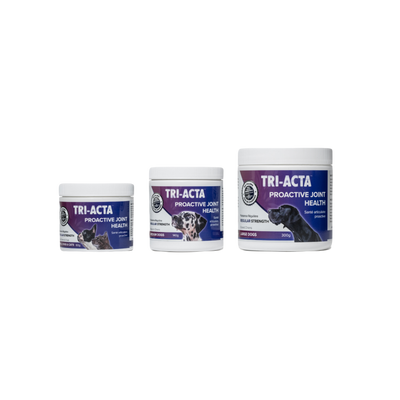
TRI-ACTA for Pets is a concentrated, pharmaceutical-grade powder formulated for cat joint health, with 100% active ingredients and no fillers. The dose is small enough to disappear into food without altering taste or smell, so your cat receives full therapeutic-level support for cartilage and joint tissue without ever knowing it's there. That's what makes it possible to give consistently, every day, the way it's meant to be given.
TRI-ACTA carries a Veterinary Health Product (VHP) designation from Health Canada, holding it to a regulatory standard most supplement brands don't meet.
When evaluating any cat powder, knowing how to read a supplement label helps you cut through marketing claims and verify what's actually in the dose.
A proactive approach for developing and younger adult pets to maintain optimal joint health mobility, minimize inflammation and fend off age-related ailments.
TRI-ACTA for Pets
Frequently Asked Questions
How do I give my cat a pill if they keep spitting it out?
Try a pill gun to place the pill further back on the tongue, coat the pill in butter or pill paste to reduce the chance of rejection, and always follow with a water syringe to encourage swallowing. If spitting out continues consistently, ask your vet about compounding the medication into a different format.
How do I give my cat a pill by myself with no help?
The towel burrito method is your best friend here. Wrap the cat snugly with front legs tucked, position them on an elevated surface, and use the manual technique described above. Good positioning does most of the work. A well-wrapped, well-positioned cat requires far less force than one you're trying to hold freehand.
How do I give my cat a pill when they bite?
Use a pill gun to keep your fingers out of range entirely, and make sure the towel wrap is genuinely secure before you start. A half-wrapped cat has more room to maneuver than you'd like.
Heavy gloves can help in a pinch, but they reduce dexterity enough that placement becomes harder. If biting is a consistent issue every time medication is due, this is a strong case for asking your vet about a compounded transdermal gel. It removes oral administration from the equation entirely and is far less stressful for both of you.
Can I open a capsule and mix it into my cat's food?
Sometimes, but not always. Some capsule contents are safe to mix into food and will be just as effective. Others are formulated specifically to be delivered intact, and opening them changes how the medication is absorbed. Always confirm with your vet before opening any capsule.
Is cat supplement powder a good alternative for picky cats?
Yes, especially for maintenance and preventive care. A quality cat food topper powder like TRI-ACTA blends into food with no detectable taste or smell, which means even a suspicious cat won't notice it. For daily supplementation that needs to happen reliably over months or years, powder is the most practical format available.
Your Cat Deserves Good Health, Without the Battle
Giving a cat a pill doesn't have to be a wrestling match every time. With the right technique, the right tools, and an honest assessment of what your cat will tolerate, it becomes routine.
And for the ongoing daily supplementation that supports your cat's joints, mobility, and long-term well-being. A cat joint supplement powder like TRI-ACTA makes it something neither of you has to dread.
Ready to make daily supplementation easy? Shop TRI-ACTA for Pets online or find a retailer near you.
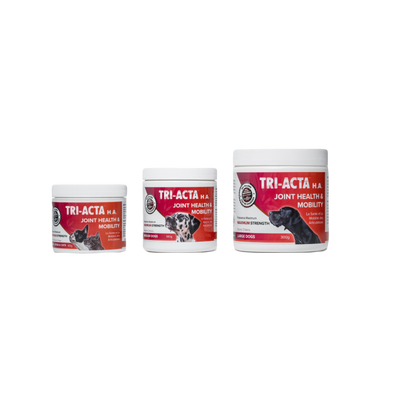
Our maximum strength formula is optimally designed to accelerate the formation of cartilage, minimize inflammation, expedite the healing process, and improve joint conditions.
TRI-ACTA H.A. for Pets
Share this post:



Proactive & Therapeutic Joint Supplements

When given daily, Integricare joint supplements recover bone and joint injuries faster and help prevent mobility injuries from happening in the first place.