

Table Of Contents
Your dog suddenly skips a step, holds up a back leg for a few strides, then walks it off like nothing happened. It looks strange. Maybe even a little alarming. But this "skip and hop" is one of the most common signs of a luxating patella, and it's more common than most pet parents realize, especially in small and toy breeds.
The name sounds serious, and it's worth taking seriously. But the good news is that many dogs live full, active lives with this condition, and not every case needs surgery.
Whether you just noticed the skip or you're already talking to your vet, knowing the full picture helps you make the best choices for your dog. In this article, we'll cover:
-
What a luxating patella is
-
The different types and grades
-
How vets diagnose it
-
Treatment options
-
Tips to help prevent it
What is a Luxating Patella in Dogs?
A luxating patella is when a dog's kneecap (patella) slips out of its normal position. This can happen in different directions:
-
Medial luxation: the kneecap shifts toward the inside of the leg (most common)
-
Lateral luxation: the kneecap shifts toward the outside of the leg
The condition ranges in severity, measured in grades (discussed in more detail under the grades section of this article), which measures the severity from minor to severe. But no matter the grade, a luxating patella can cause pain and discomfort for your dog.
To understand how this condition can turn from minor to severe if it’s not treated as soon as possible, it’s important to know how the patella works.

The patella is a small but important bone at the front of your dog's knee. It supports everyday movement like walking on a leash, running after balls, jumping for frisbees, and chasing their tail. If you've ever hurt your own knee, you know how much it affects your ability to move around comfortably.
There are two main ways a dog can develop a luxating patella:
-
They're born with it
-
Something causes it later in life
If your dog wasn't born with the condition, it can develop from overuse (common in working dogs), an injury, or excess weight. The problem is that the patella can pop back into place, giving your dog relief and allowing them to move better. You might see your dog limp and then walk normally, leading you to believe that whatever the issue was is now gone. But the problem is that the longer the patella keeps popping out and popping back in, the more stress on the protective cartilage wears away, deepening the groove and giving the patella less area where it can stay in place, often leading to a tear in the cranial cruciate ligament. That’s why it’s important to be able to recognize the signs of a luxating patella dog and take action sooner rather than later.
Signs and Symptoms of Luxating Patella in Dogs
Luxating patella can look different depending on how often the kneecap slips and how severe the case is. Some dogs show subtle signs, while others have more obvious trouble getting around. Here's what to watch for:
-
Skipping or hopping gait: Your dog may suddenly pick up one back leg while running or walking, then put it back down and continue normally within a few steps
-
Limping: This can come and go, or it can be constant depending on the grade
-
Kneecap visibly out of place: You may notice a bump or shift in the knee area, especially when the leg is extended
-
Reluctance to bear weight: Your dog may avoid putting full weight on the affected leg, especially after resting or waking up
-
Stiffness after rest: Some dogs seem fine when moving around but appear stiff or sore after lying down for a while
-
Difficulty jumping or climbing stairs: Since the knee joint is key for these movements, dogs with luxating patella may hesitate or struggle with activities that used to be easy
Beyond the physical signs, it's also worth paying attention to changes in your dog's behavior. Dogs in discomfort sometimes become less playful, more withdrawn, or reluctant to go on walks they used to enjoy. Some dogs lick or chew at the affected leg, which can be a way of responding to joint discomfort even if there's no visible injury. Others may seem irritable or less tolerant of being touched near the back legs.
The most important thing is to pay attention to patterns over time, not just single moments. A dog that skips once during a run might just have stumbled, but a dog that skips regularly, especially after rest or exercise, is showing a more consistent sign.
If you notice any of these signs, especially if they come and go or seem to worsen over time, it's worth bringing up with your vet. Catching a luxating patella early can make a big difference in how it's managed.
Front Leg vs. Back Leg Luxating Patella
A luxating patella dog always affects the back legs, not the front legs. This is because the knee joint, where the patella sits, is only found in the hind legs. Dogs don't have a true knee joint in their front legs, so there's no patella there to slip out of place in the first place.
The front legs do have a joint that bends in a similar way, called the carpus (similar to a wrist), but it doesn't have the same structure as a knee. The images below showcase the difference in these structures:

Circled: dog elbow (front leg)

Circled: dog knee (back leg). The patella is the little “bump” on the purple highlighted area on the femur.
Since the patella is unique to the hind leg anatomy, luxating patella is a hind leg condition.
If your dog is limping on a front leg, it's due to a different issue, like a shoulder, elbow, or wrist problem, rather than a luxating patella.
Types of Luxating Patella in Dogs
The different types of luxating patella dog are defined by the direction that the patella shifts. We’ve outlined each type in the table below.
|
Type of Luxating Patella in Dogs |
Description |
|
Lateral Luxating Patella Dog |
When the patella shifts toward the outside of the leg, away from the body |
|
Medial Luxating Patella Dog |
When the patella luxates inwards towards the body |
|
Bidirectional Luxating Patella Dog |
When the patella can shift in either direction |
|
Bilateral Luxating Patella Dog |
When both knees are affected, regardless of direction |
Medial luxation is the most common type in dogs, especially in small and toy breeds. Lateral luxation shows up less often and is more common in large breeds. Bidirectional luxation is rare, but it can happen, and it may make the knee feel less stable overall since the patella isn't limited to slipping just one way.
Bilateral Luxating Patella
Bilateral luxating patella is different from bidirectional, and it's easy to mix the two up. Bidirectional refers to the direction the patella moves within one knee. Bilateral refers to how many knees are affected.
A dog with bilateral luxating patella has the condition in both knees, rather than just one. This doesn't mean the patella shifts in more than one direction. It simply means both legs have a luxating patella, whether that's medial, lateral, or a mix of the two (one knee medial, the other lateral). Dogs with bilateral luxating patella may also show more noticeable symptoms, since both hind legs are affected instead of just one. This can make it harder for them to shift weight to a "good" leg, which is something dogs with a single affected knee often do without much trouble.
Luxating Patella Severity Grades in Dogs

The severity of a luxated patella is measured in four grades, which are outlined in the table below:
|
Luxating Patella Dog Grade |
Description |
Symptoms |
|
Grade 1 |
The patella can be manually manipulated but returns to the right spot once the manipulation is done |
Dogs often show no visible symptoms at this stage |
|
Grade 2 |
The patella can be manually manipulated and will return to the right spot when manually returned |
Occasional skipping or a brief hop in the hind leg may appear |
|
Grade 3 |
The patella has luxated and can be replaced with manual manipulation but may luxate again |
Limping becomes more frequent, and the leg may look slightly bowed |
|
Grade 4 |
The patella is luxated and cannot be replaced through manual manipulation |
The dog may hold the leg up constantly or refuse to bear weight on it |
Grade 1
At this stage, your dog may not show any obvious symptoms. The kneecap slips out of place but pops back on its own or with gentle manipulation, so pain and lameness are usually minimal or absent. Many grade 1 cases are found during a routine vet checkup rather than a scheduled one, because it’s more difficult to see the problem at this stage.
Grade 2
The kneecap still moves back into place on its own or with manipulation, but you may start to notice a consistent slight skip or hop in your dog's gait. This happens when the patella slips out during movement, causing your dog to briefly lift the leg before continuing normally. Because symptoms can come and go, a grade 2 luxating patella dog is also easy to miss.
Grade 3
The kneecap stays out of place more often and needs manual manipulation to move back, though it may slip out again soon after. Limping becomes much more noticeable and consistent at grade 3. You may also see changes in how your dog stands or walks, since the leg isn't tracking normally anymore.
Grade 4
The kneecap is permanently out of place and can't be manually returned to its normal position. Dogs at a grade 4 luxating patella often show significant lameness and may avoid using the leg altogether. Because the knee can no longer function normally, this grade usually requires surgery to correct.
Medial Luxating Patella Diagnosis
If you suspect your pooch has a luxating patella (or something wrong with its legs in general), the first thing you’ll want to do is call your vet for an appointment. Your vet will be able to diagnose the issue, and a treatment plan can be created from there.
Physical Examination
A luxating patella in dogs can be found through a physical examination. Your vet will be able to feel that the kneecap has shifted. They may perform a sort of twisting motion, depending on the grade of the medially luxating patella in dogs, to determine the damage or even shift the kneecap back. However, because this is such a delicate area, imaging can also be used to get a more conclusive diagnosis for your sweet pup.
Luxating Patella Dog X-Ray and CT Scans
Medical imaging can also be used to assess any damage that’s been done to the hips or legs outside of the luxating patella. For instance, cartilage can be worn away over time. The erosion of cartilage can lead to arthritis, which can be a painful condition for your dog.
Another example is hip dysplasia, which can cause lateral luxating patellas in dogs. Hip dysplasia is a condition in dogs in which their hip joints don’t fit properly into their hips. It’s a more common issue in certain larger dog breeds, like German shepherds.
This type of imaging can also be used to find any other abnormalities in the shapes of the dog’s bones or internal structures to see any other issues that could be leading to the medially luxating patella in dogs.
Diagnostic imaging is used for seeing the luxating patella in dogs in more detail but also to check for any other damage that could lead to further issues.
Should You Walk a Dog With a Luxating Patella?
Whether you should walk a dog with a luxating patella depends on the grade. Here's a general guide:
-
Grade 1: Normal walks are usually fine. Since symptoms are minimal at this stage, most dogs can keep up their regular activity level, though it's still worth keeping an eye out for any skipping or limping.
-
Grade 2: Short, gentle walks are typically okay, but high-impact activities like jumping, running, or long hikes should be limited. If you notice your dog skipping more often after activity, it may be a sign to scale back.
-
Grade 3: Activity should be more restricted. Short leash walks on flat ground are generally safer than free play or rough terrain. Rest becomes more important at this stage, especially after any noticeable limping.
-
Grade 4: Rest is usually necessary, and walking should be limited or avoided until your dog has been evaluated by a vet. Since the kneecap can't return to its normal position on its own, continued activity can make things worse.
No matter the grade, it's best to check with your vet before making changes to your dog's activity level. They can confirm the grade and give guidance specific to your dog's condition, size, and overall health.
If your dog starts limping more, seems to be in pain, or is putting less weight on the leg than usual, it's a sign to cut back on activity and rest the joint until you can get them checked out.
Luxating Patella Dog Surgery
Depending on the severity (or grade) of your dog’s luxating patella, surgery may not be necessary. Instead, your dog will be able to get by with things like maintaining a healthy diet, adding joint supplements, and undergoing physical therapy.
In some cases, however, it may be necessary for your dog to get surgery to prevent the issue from escalating further. Your vet should be able to give their recommendations after they perform a physical exam and/or obtain imaging.
When surgery is needed, there are several types your dog may undergo, sometimes in combination. These different types of luxating patella dog surgery generally fall into two categories:
-
Procedures that reinforce the soft tissue around the kneecap
-
Procedures that reshape the bone.
Bone reshaping procedures can include:
-
Deepening the groove the kneecap sits in (the trochlear groove)
-
Correcting the alignment of the femur
-
Repositioning the tibial crest, the point where the patellar tendon attaches
Each type of surgery comes with its own risks and benefits, and your vet will be able to recommend the best option for your dog's specific case. If you have questions or concerns, don't hesitate to bring them up before the procedure. Ask your vet to walk you through what the surgery involves and why it's the right choice for your dog.
It's also a good idea to ask what recovery will look like once your dog is home so you know what to expect during the healing process.
Surgery Cost
The cost of luxating patella surgery for dogs can vary quite a bit, so it’s hard to give an exact number, as your dog’s specific unique situation will significantly affect the cost. Your location also plays a major role in surgical cost.
Keeping that in mind, we can give some general ballpark figures from searching around online.
In Canada, luxating patella surgery for dogs generally costs between $2,500 and $6,000 CAD per leg. This information was found by checking out various veterinary clinics online (like the ones listed below) as well as gathering anecdotal evidence on social media sites, like Facebook and Reddit.
The total price of luxating patella dog surgery also depends highly on the clinic location, the dog’s size, and whether the procedure is performed by a general veterinarian or a board-certified veterinary orthopedic specialist.
Keep in mind that there will also be additional costs post-surgery to consider, such as physical rehabilitation, medication, and assistive devices such as a knee brace. For example, from searching online at the time this article was written, the cost of a small dog knee brace for luxating patella seems to range anywhere from $20 all the way up to over $200, depending on quality and how much support your dog needs.
Looking After Your Pup Post-Surgery
Once your pup's surgery is done and they're ready to come home, there are a few things to keep in mind to help them heal properly.
Before you leave the clinic, ask your vet whether your dog needs a follow-up visit to check the knee, and if so, when to schedule it. Your dog may also come home with a bandage, which can usually be removed after a few days.
Recovery Timeline
Most dogs need one to two months of rest with only light exercise after surgery. Your vet can give you a more specific timeline based on your dog's surgery and overall health. This rest period helps protect the stitches and gives the knee time to heal properly without the risk of re-injury.
During this time, avoid letting your dog run, play rough, or do anything strenuous. Light walks are usually fine, though you may need to wait a few days before your dog is ready to bear weight on the leg.
How Long Will My Dog Limp After Surgery?
Some limping after surgery is normal and expected while the knee heals. This can last anywhere from a few weeks to a couple of months, depending on the grade and type of surgery. If limping seems to be getting worse instead of better or continues well past your vet's expected timeline, it's worth checking in with them.
Activity Restrictions
To protect the knee while it heals, your dog's activity should be limited for the first several weeks. This means:
-
No jumping on or off furniture
-
No running up or down stairs unassisted
-
No rough play with other pets
-
No off-leash activity in the yard or park
Stick to short, controlled leash walks, and gradually increase activity only once your vet gives the go-ahead.
Watching for Infection
Keep an eye on your dog's stitches to make sure they aren't showing signs of infection. Watch for redness, swelling, irritation, or pus. If you notice any of these, bring your dog back to the vet, since they'll likely need medication to treat the infection.
Stitches are more likely to become infected if your dog licks, bites, or scratches at them. This is why many dogs wear a cone after surgery, to keep them from reaching the area.
Your vet will need to remove the stitches, usually a couple of weeks after surgery, so make sure to book that follow-up appointment.
Supporting Recovery With Supplements
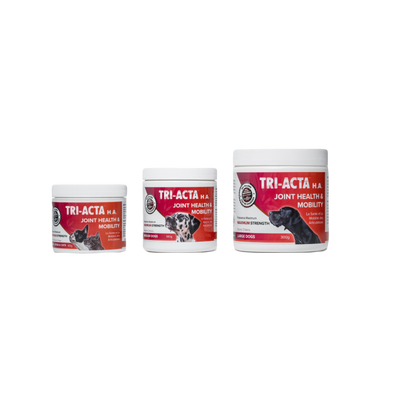
Adding a joint supplement during recovery can also help. TRI-ACTA H.A. can help support the healing process and may reduce the chances of developing post-traumatic arthritis down the road. Plus, you can safely give your dog TRI-ACTA products alongside any NSAIDs (Nonsteroidal anti-inflammatory drugs, in this case the doggy equivalent of ibuprofen) that your vet has prescribed to your dog for pain management.
Giving Medication
If your dog has been prescribed medication, follow the dosing instructions closely, and make sure they take the full course as directed. Some dogs are tricky when it comes to taking pills, so if that's the case, a few tricks can help:
-
Pill pockets
-
Hiding the pill in food
-
Covering the pill in peanut butter
Non-Surgical Treatment Options
Not every case of luxating patella needs surgery. For milder grades or dogs who aren't good surgical candidates, there are non-surgical options that can help manage symptoms and support the joint.
Dog Knee Braces for Luxating Patella
A knee brace can help support and stabilize the joint, especially for dogs with grade 1 or grade 2 luxating patella. Braces work by keeping the kneecap tracking properly during movement, which can help reduce how often it slips out of place.
Braces can also be useful after surgery, as an added layer of support while the knee heals and regains strength.
Fit is especially important. A brace that's too loose won't provide enough support, while one that's too tight can restrict movement or cause discomfort. Measuring your dog's leg carefully and working with your vet to find the right size and type of brace can make a big difference in how effective the brace is.
Massage for Luxating Patella
Massage can be a helpful addition to your dog's care routine. It can support circulation and help keep the muscles around the knee joint relaxed and strong, which in turn helps support the knee joint itself.
That said, massage should be done carefully, especially around an affected knee. It's best to work with your vet or a certified canine rehabilitation therapist, who can show you safe techniques and target the right areas without putting extra strain on the joint.
Medial Luxating Patella Prevention Tips

Thankfully, there are effective, proactive steps that you can take to help prevent a luxating patella from happening. These prevention tips include exercise, feeding a healthy diet, and giving your dog joint supplements.
Allowing Your Dog to Have an Appropriate Amount of Exercise
It’s important to keep your pet healthy and strong, and it’s important to keep your pet active. But, you’ll want to make sure you’re giving your pooch the appropriate amount of exercise and letting them rest when they need it.
Part of helping prevent a medially luxating patella is keeping your pet at a healthy weight, so you do need to ensure you’re taking your pet for the appropriate walks, runs, etc. Different activity levels are appropriate for different dogs. High-energy breeds, like German shepherds, require more exercise than low-energy dogs, like basset hounds.
However, part of helping prevent a medial luxating patella is also making sure your dog’s not overworking their knees. So, make sure your dog is not overworking itself. Give them the proper rest they need to recuperate after they’ve worked hard.
It’s a delicate balancing act, but more likely than not, you’ll be able to follow your dog’s lead. They’ll show signs of fatigue when it’s time for them to come on inside and have a drink of water and a nap.
Feed Your Dog a Healthy Diet
A healthy diet supports your dog's joints in two main ways.
-
It gives your dog the nutrients they need to build and maintain strong bones, joints, and muscles. The right vitamins, minerals, and proteins all play a role in keeping these structures healthy, which helps keep the kneecap tracking properly in the knee joint.
-
A healthy diet helps your dog maintain a healthy weight. Extra weight puts added stress on the joints, particularly in the hips and legs, which can increase the risk of injuries like a luxating patella.
To help your dog eat well, it's worth researching what food best fits their specific needs and checking the ingredient list for quality. For example, foods with a lot of filler ingredients generally offer less nutritional value.
To help get you started, check out our blog post: Top 10 Best Canadian Natural Dog Food & Supplements.
If you're still not sure which food is right for your dog, your vet or another trusted pet health professional can offer guidance based on your dog's specific needs.
Bolster Your Pooch’s Health with Supplements
Even if you feed your dog the best of the best food-wise, you may still miss certain health aspects. A great way to ensure your dog gets the best joint support is by giving them a joint supplement.
Most 'hip and joint' food or 'mobility' kibble will contain around 400—1000 mg of glucosamine in a typical bag, which is usually 15 lbs (6.80 kg) to 30 lbs (13.61 kg). The amount of glucosamine in that bag is typically measured per kg. Given that a dog typically needs around 10–20 mg of glucosamine per pound of body weight, you would have to feed your dog several kilograms of food per day before it provides any actual therapeutic value. Dogs usually only need 15–25 grams of kibble per kg of weight per meal. Feeding your dog almost the whole bag of food in a day is not only unreasonable, it’s extremely unhealthy. So it’s easy to see why a joint supplement is a better option than glucosamine-enriched kibble.
If you're looking for a joint supplement to help prevent luxating patella or to treat mild to moderate joint conditions, check out TRI-ACTA H.A.
It's 100% active ingredients targeting different aspects of joint health:

-
Glucosamine: helps repair cartilage
-
MSM: reduces pain and inflammation
-
Chondroitin: aids in the prevention of the cartilage's destruction
-
Hyaluronic Acid: lubricates the joints to help keep your pup moving
TRI-ACTA H.A. is especially helpful for more advanced grades of luxating patella, since the added hyaluronic acid provides extra joint lubrication on top of the cartilage repair and pain relief the other ingredients offer.
Our maximum strength formula is optimally designed to accelerate the formation of cartilage, minimize inflammation, expedite the healing process, and improve joint conditions.
TRI-ACTA H.A. for Pets
Take Your Dog to the Vet If You Think Something’s Wrong
Our last tip is less about prevention and more to ensure the issues are caught as early as possible.
If you notice your dog limping, in pain, and can visually see or feel that something’s not quite right, a vet can help reverse the symptoms and decrease the chances for further deterioration. Once your vet completes a physical examination of your dog, they’ll be able to diagnose the issue.
Don’t manipulate your dog's knee yourself unless you’ve been given specific instructions by your vet on how to do this.
Frequently Asked Questions About Luxating Patella in Dogs
Is a luxating patella painful for dogs?
Pain levels vary depending on the grade. Lower grades often cause little to no discomfort, while higher grades tend to cause more consistent pain, especially if the joint has been affected for a long time without treatment. Even in milder cases, repeated slipping of the kneecap can lead to wear and tear that causes discomfort over time.
Can a luxating patella heal without treatment?
A luxating patella doesn't heal on its own in the sense of the kneecap fixing its alignment permanently. However, many mild cases can be managed long-term without surgery through weight management, supplements, and controlled activity. Left untreated, the condition can worsen over time and lead to secondary issues like arthritis.
What dog breeds are most prone to luxating patella?
Small and toy breeds tend to be more prone to luxating patella, including Chihuahuas, Pomeranians, Yorkshire Terriers, and Boston Terriers. That said, larger breeds can develop the condition too, and it's sometimes linked to other joint conditions like hip dysplasia in bigger dogs.
Is a knee brace a good alternative to surgery?
A knee brace can be a helpful option for mild cases or as extra support post-surgery, but it isn't typically a substitute for surgery in more severe grades. Braces help manage symptoms and provide support, but they don't correct the underlying structural issue causing the kneecap to slip. Your vet can help determine whether bracing alone is appropriate for your dog's grade.
Can luxating patella affect both of my dog's legs?
Yes, it's possible for a dog to have the condition in both knees at the same time. This is sometimes seen in dogs with a genetic predisposition to the condition, since the same developmental factors that affect one knee can affect the other. Regular checkups can help catch this early, even if only one leg is showing noticeable symptoms.
Final Takeaways

The patella is a small but essential part of your dog's leg, playing a key role in everyday movement. If you notice signs of a luxating patella, take your dog to the vet for a proper diagnosis. From there, your vet can create a treatment plan suited to your dog's specific grade and needs. In general, the earlier it's caught, the better the outlook, and some mild cases don't even require surgery.
While luxating patella can't always be prevented, especially in cases dogs are born with, there are steps you can take to support healthy joints and lower the risk:
-
Keep your dog at a healthy, appropriate activity level
-
Feed a healthy, balanced diet
-
Support your dog's joints with supplements
-
Visit the vet as soon as you notice something seems off
Whether your dog is suffering with a luxating patella, has just had surgery to fix it, or you want to take steps to help prevent them from developing it in the future, you’ll want to start your dog on a daily joint supplement.
Purchase TRI-ACTA H.A. online or learn where to buy at a store near you.
Share this post:


Proactive & Therapeutic Joint Supplements

When given daily, Integricare joint supplements recover bone and joint injuries faster and help prevent mobility injuries from happening in the first place.