


Table Of Contents
Dog owners are often intimately familiar with the joint-related ailments that their dog can suffer from. From arthritis to general joint degradation, 80% of dogs are estimated to develop some sort of joint condition in their lifetime.
Methods of alleviating pain and treating these joint conditions in dogs can vary. Some dog owners will turn to NSAIDs, or non-steroidal anti-inflammatory drugs (similar to ibuprofen for humans), to help relieve their dog’s pain. While these drugs are effective, they come with some nasty potential side effects, including gastrointestinal issues, reduced kidney and liver function (and even failure in some cases), and much more. The potential of these side effects occurring only increases with long-term use and higher dosage amounts. Of course, a veterinarian will help you weigh the risks and benefits of the medication, but it’s still a reality that you and your vet have to deal with.
There are other medications on the market as well, like injectable Polysulfated Glycosaminoglycan (PSGAG) or Adequan, which promises to treat the source of joint issues by rebuilding cartilage. However, many of these medications come with the potential for serious side effects that can significantly affect the quality of your dog’s life in other ways than their joint mobility.
Because of these concerns, it makes sense that dog owners would turn to alternatives that promise less or no side effects, while still providing pain relief. One of these alternatives is turmeric for dogs. As a typically human-used spice that has been around for centuries and has been known for its anti-inflammatory and other medicinal benefits, many pet owners wonder if the spice has a similar effect on dogs as it does for humans.
In this article, we explore more about turmeric for dogs, including if turmeric for arthritis in dogs is effective, if the spice can even be given to dogs in the first place, and much more.
Is Turmeric Good for Dogs?
Turmeric, a golden-yellow spice commonly used in cooking, has been recognized for its medicinal properties for centuries. Derived from the root of the Curcuma longa plant, turmeric contains a powerful compound called curcumin, which is known for its anti-inflammatory, antioxidant, and antimicrobial benefits.
Recently, turmeric has gained popularity in the pet health world, especially for dogs, as a natural supplement to support overall health and address specific health issues. The reason for dog owners turning to this spice as a potential solution for their dog’s ailments is that it’s a natural ingredient that has little to no side effects.
For example, turmeric may help:
-
Dogs with arthritis or stiff joints ease inflammation and improve mobility.
-
Active or sporting dogs reduce soreness and support recovery after intense exercise.
-
Older dogs slow the progression of age-related conditions linked to chronic inflammation.
-
Dogs with minor digestive troubles improve their gut health.
These potential benefits make turmeric appealing as a natural option for pet parents who want to support their dog’s comfort and wellness without always turning to pharmaceuticals.
Is Turmeric Safe for Dogs? (And When Is It Not?)
While turmeric can support mobility, digestion, and overall health, it is not always the right choice for every pup. Let’s break down when turmeric is safe, when it’s not, and how short- and long-term use may affect your dog’s health.
Short-Term vs. Long-Term Use
Turmeric can play different roles in a dog’s health depending on whether it is used short-term or long-term. In the short term, turmeric may provide relief from occasional inflammation, stiffness, or digestive upset, usually as a result of its active compound curcumin. Many pet parents notice benefits in their dogs, such as better mobility or reduced discomfort after activity.
However, turmeric really shines as a long-term supplement. When used consistently and at the right dosage, it can help reduce chronic inflammation, support joint health, and potentially slow the progression of age-related conditions like arthritis. That said, turmeric is not a “quick fix,” and long-term use should be balanced with a veterinarian’s guidance, since its potency may interact with certain medications or require pairing with ingredients like healthy oils or black pepper for best absorption.
Joint supplements are also beneficial when used long-term and have minimal side effects. Ingredients like glucosamine and chondroitin are naturally occurring substances in the body, reducing the risk of adverse reactions. TRI-ACTA especially has a low risk of adverse effects because it contains 100% active ingredients (only glucosamine, chondroitin, MSM, and, if you get the H.A. version, hyaluronic acid) with no fillers or additives. These ingredients are also unlikely to interfere with other supplements or medications that your dog may take.
Possible Side Effects
Turmeric can cause some dogs to experience gastrointestinal issues such as diarrhea or constipation, particularly if given too high a dose too quickly. To mitigate these side effects, it is recommended to start with a lower dose and gradually increase it (dosage amounts are covered later on in this article). Additionally, turmeric can interact with certain medications, especially blood thinners and anti-inflammatory drugs, so it is crucial to consult a veterinarian before starting turmeric supplementation.
Tumeric Benefits for Dogs: What Does Tumeric Do for Dogs?

Due to the active compound in turmeric (curcumin), the benefits of turmeric for dogs can be numerous when it is used appropriately. Here are the main benefits of the spice:
1. Anti-Inflammatory Effects
Turmeric is widely recognized for its anti-inflammatory properties, making it an attractive choice for dogs suffering from arthritis, joint pain, and other inflammatory conditions. Curcumin, the active compound in turmeric, inhibits enzymes and cytokines involved in inflammation, thereby reducing pain and swelling.
However, it’s important to realize that the therapeutic benefits of turmeric can’t be guaranteed. This is mainly because the quality and efficacy of the therapeutic effects of a pure plant can’t be controlled. We’ll get into more details on this later in the article. But if you want to ensure that your dog will receive anti-inflammatory benefits, the best solution is to opt for a dog joint supplement like TRI-ACTA.
2. Antioxidant Properties
Curcumin is a potent antioxidant that neutralizes free radicals, protecting cells from damage. This action supports overall health, enhances the immune system, and reduces the risk of chronic diseases. PetMD highlights that the antioxidant properties of turmeric help in combating oxidative stress, which is crucial for maintaining a healthy immune response and preventing disease
3. Pain Relief
Due to its anti-inflammatory and analgesic properties, turmeric provides some natural pain relief for dogs. This is particularly beneficial for managing discomfort associated with joint pain, muscle soreness, and post-surgery recovery.
However, similar to relying on turmeric as an anti-inflammatory, the pain relief that your dog will get from turmeric can be hit and miss due to variances in the composition of the spice. The best way to ensure consistent, effective pain relief is to give your dog NSAIDs, but joint supplements with Methylsulfonylmethane (MSM) like TRI-ACTA can also provide pain relief by reducing inflammation of the joints.
4. Digestive Health
Turmeric aids in digestion by stimulating bile production in the liver, which helps alleviate digestive issues such as bloating, gas, and indigestion. This can be especially beneficial for dogs with sensitive stomachs or those prone to gastrointestinal disturbances.
5. Antimicrobial Benefits
The antimicrobial properties of turmeric make it effective in fighting infections and supporting overall immune health. It can help manage and prevent skin infections, assist with wound healing, and aid in fighting bacterial or fungal issues. However, if your dog already has one of these ailments, turmeric alone likely won’t cure the problem, just provide some assistance alongside actual medication. It’s important to seek veterinary treatment if your dog is suffering from a potential infection or skin condition.
6. Heart Health
Turmeric can improve cardiovascular health by reducing cholesterol levels, preventing blood clots, and improving overall circulation. This is particularly useful for dogs with heart conditions or those at risk of developing cardiovascular issues.
7. Liver Health
Turmeric supports liver health by enhancing the liver's ability to detoxify the body. It stimulates the production of bile, which aids in the digestion and absorption of fats and fat-soluble vitamins, thereby promoting liver function and overall digestive health.
8. Cancer Prevention
Curcumin has been studied for its potential anti-cancer properties. It may help prevent the growth and spread of certain types of cancer cells by inhibiting their ability to proliferate. While research is ongoing, the inclusion of turmeric in a dog's diet could potentially contribute to a lower risk of cancer development.
Dog Tumeric Forms

Turmeric can be administered to dogs in various forms, each offering unique benefits and methods of incorporation into your pet's diet. Here are the common forms of turmeric for dogs:
|
Form |
Description |
Usage |
Benefits |
|
Turmeric Paste for Dogs (Golden Paste) |
A mixture of turmeric powder, water, black pepper, and a healthy fat like coconut oil. |
Mix into your dog’s food. Start with 1/8 to 1/4 teaspoon and gradually increase to ensure tolerance. |
Easy to mix with food, and can be made at home. |
|
Turmeric Powder for Dogs |
Versatile form that can be sprinkled directly onto food. |
Sprinkle over food or mix into treats. Start with a small dose and gradually increase. |
Easy to store, mix with food, widely available, and cost-effective. |
|
Turmeric Chews for Dogs |
Pre-made treats containing turmeric, often with other beneficial ingredients like glucosamine or chondroitin. |
Administer as directed on the packaging. Typically given as a treat. Be cautious of fillers and additives. |
Convenient, highly palatable, easy to store. |
|
Turmeric Pills for Dogs |
Pills or capsules standardized to contain specific amounts of curcumin. |
Administer directly or hidden in food. Follow the dosage based on size and health condition. |
Precise dosage, often combined with other health benefits. It can be difficult to administer. |
|
Turmeric Tablets for Dogs |
Similar to pills, tablets are designed for easy administration and may include additional health ingredients. |
Give directly or crush and mix with food. Follow manufacturer's or veterinarian's dosage instructions. |
Consistent and easy dosing, easy to include in supplement regimen, often flavored for palatability. |
Turmeric Paste for Dogs (Golden Paste)
Turmeric paste, also known as golden paste, is a mixture of turmeric powder, water, black pepper, and a healthy fat such as coconut oil. The black pepper enhances the absorption of curcumin, the active compound in turmeric, while the fat helps improve its bioavailability.
-
Usage: Golden paste can be easily mixed into your dog's food. It is recommended to start with a small amount (typically 1/8 to 1/4 of a teaspoon) and gradually increase the dosage to ensure your dog tolerates it well.
-
Benefits: Easy to mix with food, and can be easily made at home.
Turmeric Powder for Dogs
Turmeric powder is a versatile form that can be sprinkled directly onto your dog's food. It is important to use high-quality, organic turmeric powder to ensure it is free from additives and contaminants.
-
Usage: Sprinkle the powder over your dog's food or mix it into homemade treats. Same as the paste, start with a small dose and gradually increase it based on your dog's tolerance and health needs.
-
Benefits: Easy to store, easy to mix with food, widely available and cost-effective (many pet stores and websites sell turmeric powder for dogs).
Turmeric Chews for Dogs
Turmeric chews are pre-made treats that contain turmeric as a primary ingredient. These chews are convenient and often include other beneficial ingredients like glucosamine or chondroitin for joint health.
-
Usage: Administer the chews as directed on the packaging. They are typically given as a treat, making them easy to include in your dog's daily routine. However, it’s important to note that treats often contain fillers, additives, and preservatives, which add calories to your dog’s diet and may cause adverse effects like allergic reactions or intolerances.
-
Benefits: Convenient and easy to give to your dog, highly palatable, and easy to store.
Turmeric Pills for Dogs
Turmeric pills or capsules are another convenient option for supplementing your dog's diet with turmeric. These are often standardized to contain a specific amount of curcumin.
-
Usage: Administer the pills as directed, either directly or hidden in food or treats. It is essential to follow dosage recommendations based on your dog's size and health condition.
-
Benefits: Precise dosage, and often combined with other ingredients to provide additional health benefits. However, a pill can sometimes be difficult to administer to your dog.
Turmeric Tablets for Dogs
Similar to pills, turmeric tablets are designed for easy administration and may come with additional ingredients to support overall health.
-
Usage: Tablets can be given directly or crushed and mixed with food. Follow the dosage instructions provided by the manufacturer or your veterinarian.
-
Benefits: Consistent and easy dosing, easy to include in your dog’s supplement regimen, often flavoured to make the tablets more palatable to your dog.
How Much Turmeric for Dogs?
Figuring out the right amount of turmeric for your dog isn’t as simple as sprinkling some into their food bowl. Because turmeric is potent and not always easy for the body to absorb, it’s important to introduce it carefully and in the right dose for your dog’s size and health needs. Too little and your pup may not experience any benefits; too much and you risk stomach upset or other side effects.
The goal is to find a safe, effective balance that supports your dog’s joint health and overall wellness. Below, we’ll break down general turmeric dosage guidelines by dog size and share key considerations to keep in mind when adding this golden supplement to your pet’s routine.
Turmeric Dosage for Dogs
When considering turmeric for dogs, the appropriate dosage depends on the size and specific health needs of the dog. General guidelines suggest starting with a small dose to ensure the dog tolerates it well. A typical dosage recommendation is 1/8 to 1/4 teaspoon of turmeric paste (golden paste) per day for small dogs, and up to 1/2 teaspoon per day for larger dogs. This paste is made by combining turmeric powder with water, black pepper (to enhance curcumin absorption), and a healthy fat such as coconut oil.
While there is no one-size-fits-all dosage, general guidelines can help you start supplementing turmeric in your dog's diet:
|
Dog Size |
Initial Dosage |
Gradually Increase to |
|
Small Dogs (10-20 lbs) |
1/8 teaspoon of turmeric paste per day |
1/4 teaspoon per day |
|
Medium Dogs (21-50 lbs) |
1/4 teaspoon of turmeric paste per day |
1/2 teaspoon per day |
|
Large Dogs (51-100 lbs) |
1/2 teaspoon of turmeric paste per day |
1 teaspoon per day |
|
Extra-Large Dogs (Over 100 lbs) |
3/4 teaspoon of turmeric paste per day |
1 1/2 teaspoons per day |
Important Considerations
-
Consult Your Veterinarian: Before starting any new supplement, it’s crucial to consult with your veterinarian to determine the appropriate dosage for your dog's specific health needs.
-
Monitor for Side Effects: Watch for any signs of gastrointestinal upset, such as diarrhea or constipation, especially when first introducing turmeric to your dog’s diet.
-
Adjust Dosage as Needed: If your dog shows any adverse reactions, reduce the dosage or discontinue use and consult your veterinarian.
The Limitations of Turmeric for Dogs
Turmeric can be a valuable addition to your dog’s wellness routine, but it’s not a magic bullet. Like many natural remedies, it comes with certain drawbacks that pet parents should understand before relying on it as their dog’s primary joint-care solution. From absorption challenges to inconsistent dosing, turmeric has its limits—especially compared to complete joint supplements that are formulated with multiple proven ingredients. Let’s take a closer look at where turmeric falls short.
Variable Absorption of Curcumin (Bioavailability Problem)
One of the biggest challenges with turmeric is that the curcumin in turmeric is not easily absorbed by the body. Dogs, like humans, can only take in a small fraction of it when turmeric is given alone. That’s why many supplements combine turmeric with black pepper (piperine) or healthy fats, which can improve absorption. Without these, the benefits may be limited.
Lack of Standardized Dosing in Dog Turmeric Supplements
Unlike veterinary-approved joint supplements, turmeric products for dogs don’t have a widely accepted standard dosage. This can make it tricky for pet parents to know how much to give safely. Too little may not provide any real benefit, while too much could cause stomach upset or interact with medications. For that reason, turmeric should always be introduced slowly and with veterinary guidance.
Why Turmeric Alone Is Not a Complete Joint-Care Solution
While turmeric can be a helpful tool for reducing inflammation, it doesn’t address the root causes of joint problems—such as cartilage breakdown or loss of joint lubrication. For a complete joint-care plan, turmeric is best used alongside proven ingredients like glucosamine, chondroitin, MSM, and hyaluronic acid. That’s where supplements like TRI-ACTA stand out: by combining these therapeutic ingredients, they not only soothe inflammation but also help repair, protect, and support joint structures over the long term.
Turmeric for Dogs vs. Joint Supplements (and Why Joint Supplements are the Better Choice)

When it comes to promoting joint health in dogs, joint supplements may offer more comprehensive benefits compared to turmeric alone. Here’s why joint supplements could be a better choice for your dog’s joint health:
Treat Both the Symptoms and the Cause of Joint Problems
The most important difference between turmeric and joint supplements is that turmeric, while helpful, doesn’t treat the root cause of joint problems. This doesn’t make it bad; just that if you’re only giving your dog turmeric, while they may have less inflammation and pain, their joints will still continue to degrade.
Joint supplements like TRI-ACTA stop the degradation because the additional glucosamine, chondroitin, and MSM immediately target the joint and assist the body with repairing cartilage, producing more lubrication for the joint, and healing damaged joint tissues. Over time, with continued use of TRI-ACTA, you’ll likely find that your dog walks better or is even able to jump up on the couch again (hopefully not with muddy paws!)
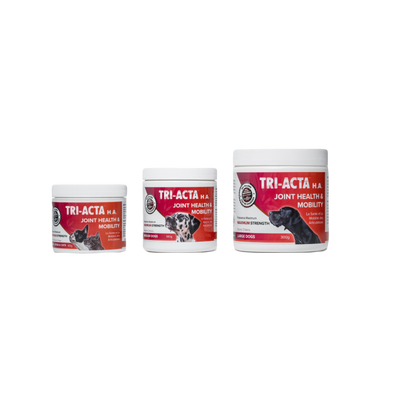
Our maximum strength formula is optimally designed to accelerate the formation of cartilage, minimize inflammation, expedite the healing process, and improve joint conditions.
TRI-ACTA H.A. for Pets
Contain Multiple Proven Ingredients at Therapeutic Dosages
It’s impossible to guarantee a therapeutic dosage amount with turmeric and other plant-based products, like CBD oil for dogs. This is because plants cannot be completely identical in the concentration of the active ingredient they contain. You can have two of the same plant growing in the exact same conditions, but because of natural genetic variation from sexual reproduction, mutations, and developmental variation (a single plant can have noticeable differences in leaf shape and size, for instance), you’re never going to get an exact amount of a therapeutic ingredient.
If you look at different turmeric products for dogs, you’ll quickly notice that none of them guarantee any specific amount of turmeric or other plant-based ingredients. Usually these products are able to stay within a general range, but even that is often not listed because it’s also difficult to guarantee. As a result, you never really know how much therapuetic benefit your dog is getting.
With a joint supplement like TRI-ACTA, that’s small-batch tested and manufactured using Good Manufacturing Practices (GMP) to ensure quality of ingredients and therapuetic amount, you can be sure that your dog is getting the same dose every time. This gives your pup consistent joint support that you can rely on.
|
Ingredient |
Role in Joint Health |
Key Benefits for Dogs |
|
Glucosamine (HCl & Sulfate) |
Repairs and maintains cartilage. HCl is highly bioavailable for quick absorption, while sulfate supports cartilage regeneration and repair. |
|
|
Chondroitin Sulfate |
Inhibits enzymes that break down cartilage and improves water retention in cartilage tissue. |
|
|
MSM (Methylsulfonylmethane) |
Supplies sulfur, a vital building block for cartilage and connective tissue, with added anti-inflammatory benefits. |
|
|
Hyaluronic Acid |
Thickens and improves the quality of synovial fluid in joints, enhancing lubrication. |
|
Easier to Measure and Administer Compared to Turmeric Paste or Powder
Another limitation with turmeric is how it has to be given. The “golden paste” that’s often made or simply mixing turmeric powder into food can be messy, inconsistent, and off-putting for picky eaters. Getting the right amount into your dog daily can feel like a science experiment that leaves yellow stains on your countertops.
In contrast, powdered joint supplements are easy to sprinkle on food with no mess, no measuring, no guesswork, and no battles at mealtime. Consistency matters with supplements—and having a simple, fuss-free way to give them makes all the difference.
Backed by Clinical Studies and Veterinary Approval
While turmeric has centuries of anecdotal use, there’s still a lack of standardized veterinary research showing exactly how effective it is for dogs in the long term. Joint supplements like TRI-ACTA, on the other hand, use active ingredients that are well-documented in veterinary science for their effectiveness in treating and preventing joint issues. TRI-ACTA is also registered as a Veterinary Health Product (VHP) with Health Canada and is trusted by veterinarians, trainers, and even top-level competitors, giving pet parents peace of mind that they’re using a product proven to work.
Can Be Used Preventatively for Puppies and Therapeutically for Seniors
Another key advantage of joint supplements like TRI-ACTA is their flexibility across all life stages. For puppies and young dogs, TRI-ACTA can be used preventatively to support healthy joint development and reduce the risk of conditions like hip dysplasia later in life. If you have a senior pup, TRI-ACTA H.A. adds hyaluronic acid, which helps with joint lubrication.

Conclusion
Understanding the benefits and applications of turmeric for dogs is essential for pet owners looking to provide natural and effective health support for their canine companions. Turmeric, with its anti-inflammatory, antioxidant, and antimicrobial properties, offers several health benefits, particularly for dogs suffering from joint pain, digestive issues, and immune health concerns.
Joint supplements are specifically formulated to address the complex needs of joint health, providing a multi-faceted approach to reducing inflammation, promoting cartilage repair, and ensuring proper lubrication of joints. They are also easier to administer consistently, ensuring that dogs receive the correct dosage daily for maximum benefit.
While turmeric can be a valuable supplement, it's important to recognize that its efficacy may vary due to differences in the quality and composition of the turmeric used. For consistent and targeted joint health support, joint supplements like TRI-ACTA, which combine multiple proven ingredients such as glucosamine, chondroitin sulfate, MSM, and hyaluronic acid, are often more reliable and comprehensive.
Purchase TRI-ACTA online or learn where to buy at a store near you.
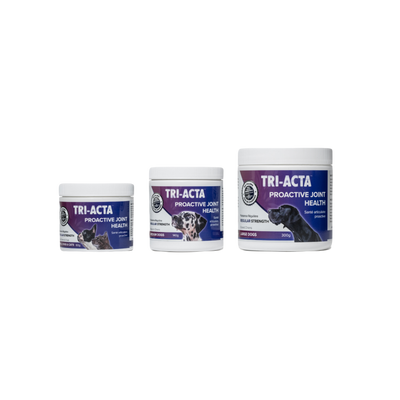
A proactive approach for developing and younger adult pets to maintain optimal joint health mobility, minimize inflammation and fend off age-related ailments.
TRI-ACTA for Pets
Share this post:



Proactive & Therapeutic Joint Supplements

When given daily, Integricare joint supplements recover bone and joint injuries faster and help prevent mobility injuries from happening in the first place.