

Table Of Contents
It can be heartbreaking and confusing when your dog suddenly starts limping or seems reluctant to play. One of the most common culprits behind this change is a torn ACL (Anterior Cruciate Ligament), a key structure that keeps your dog’s knee stable and pain-free.
Whether it happens in an energetic leap or develops slowly over time, an ACL injury can affect your dog’s comfort, mobility, and quality of life. The good news? With early detection and the right treatment—surgical or not—most dogs can get back to running, playing, and enjoying their days again.
In this article, we’ll break down everything you need to know about a torn ACL in dogs, from how they happen and what signs to watch for, to the best recovery and prevention options available.
Understanding the ACL: Torn ACL vs Normal ACL in Dogs
A dog’s ACL, which is more accurately called the Caudal Cruciate Ligament (CCL) in veterinary medicine (it’s just called an ACL colloquially because we have an ACL and the CCL functions the same way as our ACL) is a vital ligament that stabilizes the knee joint (also known as the stifle joint). The ACL connects the femur (thigh bone) to the tibia (shin bone) and prevents the tibia from sliding forward when your pup walks, runs, or jumps. Together with the Lateral Cruciate Ligament, which supports the outer side of the knee, the ACL ensures that each stride remains stable and pain-free.

When the ACL is intact and healthy, it allows your dog to move fluidly—absorbing shock, bearing weight evenly, and maintaining smooth motion. However, when torn, even partially, this balance is lost. The result is a cascade of changes in the joint that can lead to pain, inflammation, and progressive dog arthritis if not managed properly.
Anatomy of a Healthy ACL
In a healthy stifle joint, the ACL acts like a sturdy elastic band, controlling back-and-forth movement between the femur and tibia. It keeps the knee aligned, distributes weight evenly, and works in sync with muscles, tendons, and other ligaments to provide strength and flexibility to the joint.
When your dog walks or runs, the ACL tightens and relaxes in a perfect rhythm, keeping the joint from over-rotating or collapsing under pressure. In other words, your dog’s ACL is a silent stabilizer that allows your pup to chase a ball, leap into the car (or on the couch), or simply stand comfortably without strain.
But once the ligament becomes overstretched or torn, even slightly, this entire system fails. Without the key support of the ACL, the bones in the knee begin to move abnormally, grinding cartilage and stressing surrounding tissues—setting the stage for inflammation and pain.
Torn ACL vs Normal ACL Dog X-Ray
With a normal ACL, the stifle joint moves in perfect alignment with no clicking, slipping, or sudden instability. The joint fluid also remains smooth, and the surrounding muscles work together to support motion.
But with a torn ACL in dogs, the tibia shifts forward unnaturally each time your dog bears weight. This movement causes discomfort and often makes the dog limp or favour the leg. Over time, the instability can lead to arthritic changes in the stifle joint.
Even though the ligament itself isn’t visible on an X-ray (because of course X-rays only show bones), veterinarians can still identify a torn ACL by looking for secondary signs:
-
Joint swelling or effusion (fluid buildup)
-
Thickening around the joint capsule
-
Early arthritic changes, such as bone remodeling
-
Forward movement of the tibia when manipulated (known as a cranial drawer sign test)
How Dogs Tear Their ACL
Just like in humans, a dog’s ACL can tear in two main ways: through sudden trauma or slow degradation over time. In both cases, the result is the same—pain, instability, and reduced mobility—but the path to injury can look very different.
Sudden Trauma vs Slow Degeneration
A traumatic ACL tear typically happens in young, energetic dogs. Imagine a playful pup sprinting after a ball, pivoting sharply, or landing awkwardly after a jump. That quick twist or overextension can overstress the ligament, causing it to snap suddenly. These injuries are more common in athletic or working breeds that are constantly on the move.
In contrast, a degenerative ACL tear develops quietly over months or even years. As dogs age, their ligaments naturally lose elasticity and weaken, especially when combined with factors like poor joint alignment, obesity, or repetitive stress. What starts as a few frayed fibres can gradually become a full rupture, often triggered by something as simple as jumping off the couch or slipping on ice during a walk.
|
Type of Injury |
How It Happens |
Common in |
Symptoms and Progression |
Key Contributing Factors |
|
Sudden Trauma |
A single, forceful event such as twisting the knee during play, landing awkwardly, or slipping. |
Young, athletic dogs or working breeds. |
Sudden onset of lameness, pain, or limping. Dog may refuse to bear weight on the leg immediately after injury. |
High-impact activity, quick directional changes, accidents during running or jumping. |
|
Slow Degeneration |
Gradual fraying and weakening of the ligament over time due to wear and tear. |
Middle-aged to senior dogs; often large breeds. |
Symptoms progress slowly—occasional limping, stiffness after rest, or mild swelling that worsens over weeks. |
Age, excess weight, poor conditioning, chronic inflammation, genetic predisposition. |
In many dogs, degeneration plays a larger role than trauma. Veterinary research shows that up to 80% of canine ACL tears have an underlying degenerative component. This is why preventative joint care, including the right supplements and healthy weight management, can make such a difference in reducing risk.
Breeds at Higher Risk
While a torn ACL in dogs can happen with any breed, certain breeds are predisposed to them due to their body structure, activity levels, and genetic tendencies.
1. Labrador Retrievers
Labradors are one of the most common breeds affected by ACL tears. Their friendly, energetic nature means they’re constantly running and playing, putting repetitive strain on their knees. Labs are also prone to carrying a few extra pounds, which increases joint stress.
2. Rottweilers
The typical rottweiler pup tends to have a steeper tibial plateau angle—the slope at the top of the shin bone—which naturally puts more tension on the ACL. Combined with their muscular build and powerful movements, the steep tibial angle in rottweilers makes them especially vulnerable to ligament injuries.
3. Golden Retrievers
Goldens share similar risk factors with Labs: an active temperament and a genetic predisposition to joint conditions such as hip dysplasia and early arthritis. These issues can alter movement mechanics, placing extra strain on the ACL over time.
Other breeds, such as Boxers, Newfoundlands, and St. Bernards, are also at a higher risk of an ACL injury, especially as they age or gain excess weight.
Lifestyle and Weight Factors That Increase Risk
A dog’s weight, activity level, and conditioning play major roles in ACL health. Overweight dogs put significant additional strain on their joints. Every extra pound of body weight adds up to four pounds of pressure on the knee. Over time, this constant stress weakens the ligament and surrounding tissues.
Similarly, dogs that go from inactivity to sudden bursts of energy (for instance, weekend-only exercise or seasonal activity) are more likely to experience ACL tears. Their muscles and ligaments aren’t conditioned for intense movement, increasing the chance of injury.
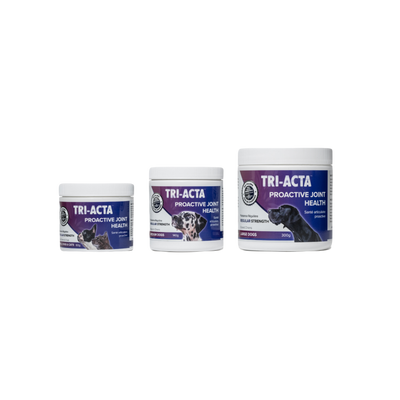
On the other hand, controlled, consistent exercise and a healthy diet can dramatically lower the risk. Incorporating a joint supplement like TRI-ACTA or TRI-ACTA H.A. (which includes hyaluronic acid for increased joint lubrication) can further protect the knees by improving cartilage strength, reducing inflammation, and maintaining joint elasticity—supporting your dog’s knees long before wear and tear takes its toll. A proactive approach for developing and younger adult pets to maintain optimal joint health mobility, minimize inflammation and fend off age-related ailments.
TRI-ACTA for Pets
Signs of a Torn ACL in Dogs

A torn ACL can look different depending on whether the ligament is fully ruptured or only partially torn. But in most cases, the signs point to one key thing: pain and instability in your dog’s hind leg. Recognizing these symptoms early is crucial, since prompt action can help minimize further damage and long-term arthritis.
1. Lameness
The first and most common sign of an ACL injury in dogs is a sudden limp in one of your pup’s back legs. Some dogs may hold the injured leg slightly off the ground or walk on it only intermittently. With a full tear, the lameness appears more abruptly, often after a burst of activity (anyone up for a game of frisbee?).
While in a partial tear, lameness may come and go, seeming to improve with rest before returning again. This intermittent limp is often mistaken for a minor sprain, but it’s an early red flag that something deeper, such as a ligament strain, may be occurring.
2. Swelling
Another telltale sign of a torn ACL in dogs is swelling around the stifle joint. The inflammation results from a buildup of joint fluid inside the knee capsule. Specifically, you may notice:
-
A puffiness or bulge around the knee area.
-
The knee area is warm to the touch.
-
Your dog reacting or pulling away when the area is touched.
If the injury is older or chronic, scar tissue may begin forming around the joint, making it look enlarged or misshapen.
3. Weight-Bearing Issues
Because the ACL helps stabilize the knee, dogs with a torn one often struggle to bear weight on the affected leg. You might see them shift their weight to the other hind leg or sit in a “lazy” posture where one leg sticks out awkwardly to the side.
When one ACL tear happens, dogs are at a much greater risk of it happening in both knees. It’s estimated that this can happen in 50% or more of dogs with an ACL tear (some sources say 50%, others say 60%, but the point is that it’s very common). This is because when one ACL is torn, dogs will naturally transfer most of their weight to the other leg, putting the stifle joint on the good leg under more pressure, which increases the risk of the ACL ligament tearing in that good leg.
As you can imagine, if both ACLs tear, it’ll significantly affect your dog’s quality of life. This is another reason why it’s so important to seek care immediately if you suspect that your dog has a tear in their ACL, even if they aren’t always limping around.
Symptoms of ACL Tear in Dogs vs Arthritis or Sprains
ACL tears can sometimes be confused with arthritis or soft-tissue injuries like leg sprains, since the symptoms overlap (stiffness, lameness, reluctance to move, etc.) However, there are distinct differences that can help pet owners and vets tell them apart:
|
Condition |
Typical Onset |
Key Symptoms |
Progression |
Pain Pattern |
|
ACL Tear |
Sudden or gradual onset after activity |
Limping, joint swelling, instability when walking or turning |
Worsens quickly without rest or treatment |
Sharp pain with weight-bearing or pivoting |
|
Arthritis |
Gradual onset over months or years |
Stiffness, difficulty rising, reduced range of motion |
Slowly progressive, may fluctuate with weather |
Dull, consistent pain that improves with gentle movement |
|
Sprain or Muscle Strain |
Sudden, often after strenuous activity |
Mild limping, tenderness in soft tissue, no joint instability |
Heals with rest within days to weeks |
Mild to moderate pain that is localized to the muscle, not the joint |
Because ACL injuries destabilize the entire knee joint, they rarely improve without targeted treatment. Sprains, on the other hand, typically heal with rest alone.
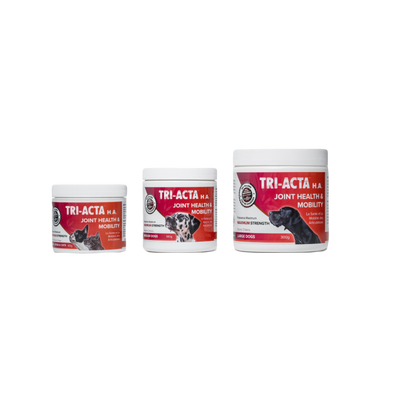
To help your dog recover from a torn or partially torn ACL (or even arthritis or strain in the stifle joint), they must rest, but you can also boost their recovery by giving them a daily joint supplement. Even though the ACL is a ligament, it’s still an essential part of the joint, and the ingredients (glucosamine, chondroitin, methylsulfonylmethane, which is often shortened to MSM) in a joint supplement like TRI-ACTA are specifically formulated to target the soft tissue structures in the joint. Glucosamine provides overall joint support, and alongside chondroitin, it helps repair and regenerate worn cartilage. MSM is a natural anti-inflammatory that helps reduce swelling and pain.
With a consistent daily dose of a therapeutic joint supplement, you’re giving your pup a leg up in recovering from a torn ACL. Our maximum strength formula is optimally designed to accelerate the formation of cartilage, minimize inflammation, expedite the healing process, and improve joint conditions.
TRI-ACTA H.A. for Pets
How to Distinguish Partial ACL Tear in Dogs vs Complete Rupture
Partial and complete ACL tears share similar signs, but their severity and long-term outcomes differ. The table below summarizes how veterinarians typically distinguish between the two:
|
Type of Tear |
What Happens |
Visible Signs |
Prognosis |
|
Partial Tear |
Only part of the ligament fibres are damaged, leaving some stability in the joint. |
Limping that improves with rest but returns with activity, mild swelling, and stiffness after exercise. |
May respond well to non-surgical management such as rest, controlled exercise, and joint supplements like TRI-ACTA H.A. |
|
Full Tear (Complete Rupture) |
The ligament is fully torn, causing the tibia to move freely forward under the femur. |
Inability to bear weight, obvious instability, severe pain, and joint swelling. |
Usually requires surgical repair followed by a long-term recovery and mobility support plan. |
Even with a partial ACL tear in dogs, the joint remains vulnerable. Without intervention, the ligament can continue to degenerate until it completely ruptures. Early support with therapeutic joint supplements helps reduce inflammation and strengthen the connective tissues, aiding healing and potentially delaying or preventing the need for surgery.
Early Red Flags: Subtle Symptoms Owners Might Miss
Not every ACL tear happens suddenly or comes with an obvious limp. In fact, many dogs develop partial or degenerative ACL injuries gradually, with subtle early signs that can be easy to overlook. Recognizing these red flags early can make a tremendous difference in protecting your dog’s joint health and preventing a complete rupture down the line.
Decrease in Activity or Reluctance to Jump or Play
If your dog suddenly seems less interested in playing fetch, going for walks, or jumping into the car, it could be more than aging or tiredness—it might be an early indicator of joint discomfort.
Dogs instinctively hide pain, so instead of yelping or limping right away, they might simply slow down, hesitate before climbing stairs, or take longer to lie down and get up. You might also notice subtle behavioural changes like:
-
Stopping to rest more often during walks.
-
Pausing before jumping onto furniture.
-
Avoiding slippery floors or uneven terrain.
These quiet cues often appear weeks, or even months, before an ACL tear becomes severe enough to cause obvious lameness.
Stiffness After Rest
Another common early sign is stiffness or awkward movement after rest, especially in the morning or after long naps. This occurs because inflammation in the knee joint makes movement uncomfortable until it “warms up”.
In mild or partial ACL injuries, stiffness may fade as your dog moves around, but it tends to return after inactivity. Many pet owners mistake this for arthritis or aging, but in younger or middle-aged dogs, it can be an early warning sign of ligament strain.
Keeping track of when the stiffness appears and how long it lasts can help your veterinarian differentiate between an ACL problem and other mobility issues.
Progressive Muscle Loss in One Leg
Over time, dogs with an ACL injury will naturally put less weight on the affected leg. This reduced use of the leg leads to muscle atrophy (loss of muscle mass), especially in the thigh. You may notice:
-
One leg appearing skinnier or less muscular than another.
-
Visible unevenness when viewing your dog from behind.
-
Reduced endurance during walks or play.
This muscle imbalance is often a telltale sign that your dog has been compensating for pain or instability. Even if your pet doesn’t seem overtly lame, these subtle changes reveal that one leg is working harder than the other.
Addressing these signs early through rest, controlled exercise, and proactive joint support with TRI-ACTA or TRI-ACTA H.A. (the latter is likely the better option, as the addition of hyaluronic acid enhances lubrication in the joints) can help preserve muscle tone, minimize inflammation, and reduce the chance of the ligament deteriorating further.
Non-Surgical Treatment Options

When a dog tears its ACL, surgery is often recommended—especially for complete ruptures. However, not every case requires or is suited for surgery. For many dogs, especially those with partial tears, mild degeneration, or specific health conditions, non-surgical management can be a safe and effective alternative.
These treatment plans focus on reducing inflammation, restoring stability, and strengthening supporting tissues, allowing the joint to heal naturally over time.
Why Dog Owners May Opt Out of Surgery
There are several valid reasons why a pet parent might choose to manage an ACL injury conservatively rather than surgically:
|
Reason |
Explanation |
|
Cost |
ACL surgeries can range from $1,200–$10,000 CAD*, depending on the procedure type (TPLO, TTA, or extracapsular repair). For multi-dog households or bilateral tears, these costs quickly multiply. |
|
Severity of Tear |
Partial tears or early-stage degeneration can often be managed successfully with conservative care—especially when combined with joint supplements and lifestyle adjustments. |
|
Age |
Senior dogs may not tolerate anesthesia or surgical recovery well. In these cases, comfort, pain management, and mobility preservation are prioritized. |
|
Current Medications or Health Conditions |
Dogs taking certain medications (like steroids or immunosuppressants) or managing chronic diseases (such as heart or kidney disease) may not be good surgical candidates. |
|
Low Overall Activity Level |
For dogs that are less active, such as smaller breeds or older companions, non-surgical approaches can provide enough stability to maintain a good quality of life without the risks of surgery. |
* This is an estimate only, based on information from a variety of sources that, when analyzed as a whole, give a ballpark figure on the cost of ACL surgery for dogs. Sources: 1, 2, 3
Dog Knee Braces
A canine knee brace provides external support to stabilize the injured joint and reduce strain on the torn ligament. It works by limiting forward motion of the tibia, allowing scar tissue to form and strengthen the knee over time.
While not a cure, braces can be particularly helpful for:
-
Dogs with partial tears or post-surgery recovery.
-
Dogs too old or medically unfit for surgery.
-
Preventing injury to the opposite knee, which is at higher risk after one ACL tear.
A custom-fitted brace combined with gradual, low-impact activity can significantly improve function and comfort.
Acupuncture
Veterinary acupuncture can be used to reduce inflammation, improve blood flow, and alleviate pain in dogs with ACL injuries. While acupuncture doesn’t repair the ligament itself, it can enhance comfort and complement other conservative treatments.
Swimming
Hydrotherapy, which is swimming or walking on an underwater treadmill, is one of the best low-impact exercises for dogs with ACL injuries. The buoyancy of water removes stress from the joints while still allowing muscles to strengthen. This helps maintain range of motion, prevent muscle loss, and support balanced recovery.
Hydrotherapy is especially beneficial after the acute pain phase has subsided, and under the supervision of a rehab professional.
Massage
Regular canine massage can improve circulation, reduce muscle tension, and promote healing in the affected leg. By keeping the surrounding muscles flexible and strong, massage helps prevent compensatory strain in other parts of the body, like the hips and spine.
It’s a gentle, non-invasive therapy that pairs well with exercise, supplements, and braces for a holistic recovery approach.
Joint Supplements
Supplements play a vital role in both healing and prevention. They provide the building blocks the body needs to restore cartilage, strengthen connective tissue, and reduce inflammation.
TRI-ACTA H.A. is a therapeutic joint supplement formulated specifically for pets with existing mobility issues or injuries such as ACL tears. It combines four powerful, 100% active ingredients—glucosamine (sulfate and HCl), chondroitin, MSM, and hyaluronic acid—to target both the cause and symptoms of joint damage.
-
Glucosamine repairs cartilage and supports new tissue formation.
-
Chondroitin protects existing cartilage from breakdown.
-
MSM reduces pain and inflammation naturally.
-
Hyaluronic Acid improves joint lubrication and cushioning.
Together, these components stabilize the joint, ease pain, and encourage regeneration, making TRI-ACTA H.A. a trusted choice among veterinarians and pet owners across Canada for managing ACL injuries conservatively.
Even for dogs that eventually undergo surgery, using TRI-ACTA H.A. before and after the procedure can strengthen joint tissues and enhance recovery outcomes.
Conclusion
A torn ACL can be a difficult diagnosis for any pet parent to hear, but it doesn’t have to mean the end of an active, happy life for your dog. Understanding the early warning signs, knowing your treatment options, and supporting joint health daily can make all the difference in your dog’s long-term mobility and comfort.
Whether your vet recommends rest, physiotherapy, or surgery, supplementing your dog’s recovery with a high-quality joint formula like TRI-ACTA H.A. helps protect cartilage, reduce inflammation, and strengthen connective tissue, supporting healing and future joint stability.
Purchase TRI-ACTA H.A. online or learn where to buy at a store near you.
Our maximum strength formula is optimally designed to accelerate the formation of cartilage, minimize inflammation, expedite the healing process, and improve joint conditions.
TRI-ACTA H.A. for Pets
Share this post:


Proactive & Therapeutic Joint Supplements

When given daily, Integricare joint supplements recover bone and joint injuries faster and help prevent mobility injuries from happening in the first place.