

Table Of Contents
A dislocated hip can happen in an instant. One awkward landing, an overexcited zoomie session, or a slippery floor can leave your dog moving in a way that feels unfamiliar.
Afterward, you might notice a quick skip in their step, a leg held slightly off the ground, or a new hesitation you cannot quite explain.
Underneath that subtle shift, the hip joint is under real stress. Recognizing the early signs of a potential hip dislocation in dogs can make a meaningful difference in your dog’s comfort and long-term mobility.
Understanding how a healthy hip should move and what it looks like when something is off helps you respond with confidence.
This guide explains how to tell the difference between hip dislocation in dogs and hip dysplasia, why some dogs are more likely to experience it, and what treatment and recovery involve.
What Does Hip Dislocation Look Like in Dogs?
Hip dislocation happens when the ball of the hip joint slips out of the socket. You’ll usually see a sudden change in how your dog moves: your pup may lift the affected leg so it looks shorter, hang it at a strange angle, or lift it off the ground.
Many dogs will not put weight on their affected leg at all. They may yelp, freeze during movement, or turn to look at the hip. These symptoms of hip dislocation in dogs can appear right after a fall, a rough play session, or an awkward twist.
Hip Dislocation vs Normal Anatomy
In a healthy hip, the ball at the end of the thigh bone fits comfortably into a rounded socket. Strong ligaments keep everything snug. When a hip becomes dislocated, the ball of the hip joint pops out of the socket, and the entire system loses its stability.
The body tries to protect itself by shifting weight and tightening surrounding muscles. It creates an uneven, wobbling effect when your dog moves.
You might notice your dog:
-
Hopping on three legs
-
Holding one leg up while standing still
-
Swinging the affected leg outward during movement
-
Refusing stairs and jumping
-
Acting stiff or tense in the hip
-
Showing sudden hesitation during play
Dogs often become quiet or clingy when uncomfortable. These symptoms of hip dislocation in dogs often appear suddenly rather than gradually.
When the hip sits out of the socket for too long, soft tissues stretch, tear, and become inflamed. Cartilage can wear down, which increases the risk of arthritis later in life.
Quick treatment can sometimes allow a veterinarian to gently guide the hip back into place without surgery. Waiting can remove that option and lead to more invasive procedures.
Hip Dysplasia vs. Hip Dislocation in Dogs: Risk Factors
Hip dysplasia is a long-term condition that develops as the hip socket forms too shallowly during growth. It creates instability over time.
Hip dislocation is usually sudden and triggered by trauma. When comparing hip dysplasia vs hip dislocation in dogs, think slow burn versus sudden event.
Dogs with dysplasia have weaker joint support, making them more likely to experience a dislocation later in life. Dysplasia can happen in both hips. Dislocation usually affects one joint at a time.
|
Feature |
Hip Dysplasia |
Hip Dislocation |
|
Onset |
Gradual over months or years |
Sudden and often traumatic |
|
Common Age |
Young adulthood and later years |
Any age after trauma |
|
Pain Level |
Can vary and increase over time |
Immediate and intense |
|
Weight Bearing |
Often partial |
Often none |
|
Number of Hips Affected |
Commonly both |
Usually one |
|
Treatment Focus |
Long-term management |
Immediate repositioning or surgery |
Key Differences
Hip dysplasia often presents as stiffness after rest, slow rising, and a "bunny hop" gait. Signs of hip dislocation in dogs are more immediate.
Dislocation typically involves sharp pain, refusal to bear weight, and visible limb rotation. Dysplasia calls for long-term management strategies. Dislocation calls for fast intervention. Both require veterinary support, but the level of urgency differs.
How Hip Dysplasia Predisposes Dogs to Dislocation
With canine hip dysplasia, dogs have a shallow socket that doesn’t hold the hip securely. Over time, tissues stretch and weaken with the effort to hold the leg in place. When a dog with dysplasia slips, the joint lacks the stability to prevent the ball from sliding out.
Owners often lean on healthy habits to support joint strength during hip dislocation in dogs treatment at home after veterinary care.
Helpful habits can include:
-
Keeping weight in a healthy range
-
Avoiding slippery floors
-
Choosing low-impact exercise, such as swimming
-
Adding joint supplements recommended by a veterinarian
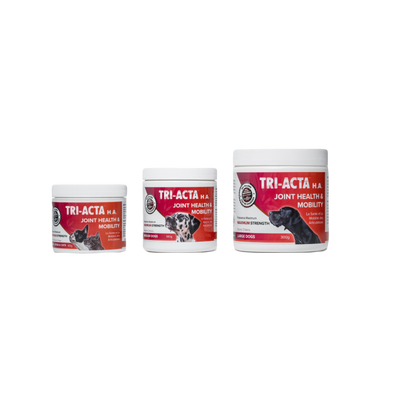
TRI-ACTA H.A. is a daily joint supplement for dogs formulated to help dogs develop and maintain strong joints. Ingredients like two types of glucosamine, chondroitin, and Methylsulfonylmethane (MSM) work together to provide lubrication, cartilage support, and reduced inflammation. Hyaluronic acid gives enhanced lubrication for ease of movement.
Our maximum strength formula is optimally designed to accelerate the formation of cartilage, minimize inflammation, expedite the healing process, and improve joint conditions.
TRI-ACTA H.A. for Pets
Role of Genetics, Breed, and Age
Genetics influences both the risk of hip dysplasia and dislocation. Larger breeds tend to be more affected by the condition.
For example, about 47% of Saint Bernards are affected by hip dysplasia, which shows how their size and structure can put added stress on the hip joint. Golden Retrievers and German Shepherds are other breeds that often experience this condition. But any dog can be born with hip dysplasia or develop it over time due to poor diet, weight, or other factors.
Young dogs often dislocate their hips during energetic play because their growth plates are still developing. Hip dislocation in older dogs can happen because muscle mass and joint strength decrease with age.
Older dogs may also take longer to recover and may require extra pain support. Breed history and age help veterinarians determine the best course of treatment for hip dislocation in dogs and establish realistic recovery expectations.
Hip Dislocation in Older Dogs vs. Younger Dogs
|
Factor |
Younger Dogs |
Older Dogs |
|
Typical Cause |
Rough play, slips, awkward landings |
Arthritis, muscle loss, long-term wear |
|
Joint Health |
Stronger cartilage and tissues |
Thinner cartilage and weaker soft tissues |
|
Muscle Strength |
Better support around the hip |
Reduced support and stability |
|
Healing Speed |
Faster recovery with rest and rehab |
Slower recovery and more inflammation |
|
Pain Level |
Usually short-term discomfort once treated |
Can be more noticeable due to chronic pain |
|
Arthritis Risk |
Lower risk early in life |
Higher due to aging joints |
|
Support Needs |
Basic rest and controlled activity |
Supplements, pain management, and mobility aids |
|
Long-Term Outlook |
Good return to normal activity |
Ongoing support to maintain comfort |
Younger dogs often bounce back quickly once the hip is treated because their tissues are stronger and their muscles can stabilize the joint more easily.
Older dogs may require additional support, as aging joints are more susceptible to inflammation and changes in movement. Supplements, gentle exercise, and pain management can help them stay comfortable during hip dislocation in dogs recovery.
Regardless of age, prompt veterinary care gives your dog the best chance of returning to safe, happy movement.
Obesity and Joint Stress
Extra weight places pressure on the hips. The more a dog weighs, the harder the joint must work.
When obesity combines with soft tissue weakness or dysplasia, the hip can pop and dislocate more easily. Maintaining a healthy weight reduces strain, improves balance, and supports long-term mobility. It’s one of the simplest ways to protect the hips.
Trauma
Trauma is the most common cause of hip dislocation in dogs. An unexpected impact can pop the hip out of the socket.
The force pushes the femoral head out of position, and the joint becomes unstable right away.
Common types of trauma include:
-
Falls: Puppies, older dogs, and dogs with weak joints can dislocate a hip during a fall. For example, they may jump off furniture, fall off a porch step, or slide on hard flooring. Falls are sneaky because they often look minor. If you notice limping or leg rotation after a fall, keep a close eye on movement and comfort.
-
Accidents: Accidents can occur during daily life, even with the most during daily life can surprise even careful owners. A rushing door, a dropped object, or a quick turn can create enough force to shift the hip. Dogs who love to run tight corners or leap off surfaces without planning can be more vulnerable.
-
Rough play: Dogs don’t always know their limits. Wrestling, chasing, and tackling can cause the hip to twist at odd angles. Young dogs are especially at risk because they play hard and their joints are still developing.
How to Treat Hip Dislocation in Dogs

Hip dislocation in dogs treatment always starts with a veterinarian. Once the hip pops out of the socket, everything around it becomes irritated and painful. Your dog may be scared, stiff, or unsure of how to stand.
Acting quickly gives your dog a significantly better chance of avoiding surgery and returning to normal movement sooner.
Veterinary Assessment and Diagnostic Imaging
Your veterinarian will examine how your dog walks, how the hip responds to gentle pressure, and where your pup is experiencing pain.
They’ll usually recommend X-rays to confirm the direction of the dislocation and to check for fractures. It’s the easiest way to see what the joint looks like on the inside.
Also, diagnostic imaging helps your veterinarian decide which treatment option is safest and most effective. You’ll know exactly what you are dealing with, rather than trying to guess based on symptoms of hip dislocation in dogs alone.
Closed Reduction (Non-surgical Repositioning)
If the injury is fresh, your veterinarian may recommend a closed reduction. This means gently guiding the hip back into the socket while your dog is sedated so they stay relaxed and comfortable.
Once the hip is back in place, a supportive sling or bandage might be used to prevent another slip. Closed reduction is most effective when addressed early. Waiting too long allows swelling to tighten the area, which makes non-surgical repositioning difficult.
Open Reduction (Surgical Repair With Implants)
Some dislocations are more stubborn. If ligaments are torn or the hip has slipped out of place more than once, surgery can provide long-term stability.
During an open reduction, the surgeon returns the joint to its natural position and uses implants or sutures to secure it in place.
It can feel intimidating to consider surgery, but many dogs go on to move comfortably and confidently afterward. It's a permanent fix when the hip needs extra support.
When Amputation or Hip Replacement Is Considered
These options are reserved for very severe damage. If the hip socket is shattered or the joint can’t be repaired, amputation removes chronic pain and gives your dog a fresh start. Dogs adapt surprisingly well and can run, climb, and play on three legs.
In other cases, a total hip replacement can restore a smooth joint motion and provide long-term comfort. These decisions are made to protect quality of life, not limit it.
Hip Dislocation in Dogs Recovery: What to Expect
Recovery takes patience and consistency. The first few weeks focus on rest, controlled walks, and helping your dog feel safe while moving around the home.
Your veterinarian may recommend a sling for extra support during bathroom breaks.
Pain medication helps keep inflammation low, allowing your dog to relax instead of tensing up around the hip. While every case is unique, most dogs begin to regain strength steadily once the hip begins to settle back into place.
Typical Recovery Timelines for Mild vs. Severe Cases
Recovery time depends on how quickly treatment begins, how stable the joint becomes, and whether surrounding tissues were damaged.
Mild cases usually improve with rest and support. Severe cases often need longer rehabilitation and careful monitoring. This table provides a simple comparison to help you know what to expect during recovery.
|
Recovery Factor |
Mild Dislocation |
Severe Dislocation |
|
Initial Pain |
Improves within a few days |
Can last several weeks |
|
Activity Limits |
Two to four weeks |
Eight to twelve weeks |
|
Risk of Repeat Dislocation |
Low with early treatment |
Higher if tissues are torn or stretched |
|
Return to Walks |
Within two weeks |
Four to six weeks |
|
Need for Physical Therapy |
Helpful but not always required |
Strongly recommended |
|
Long-Term Outlook |
Good mobility |
Increased chance of arthritis later |
Rehabilitation
Rehabilitation supports proper healing by strengthening the muscles that hold the hip in place.
-
Physical therapy: provides hands-on support that reduces stiffness and promotes healthy movement. Therapists may use massage, stretching, and balance exercises to calm inflammation and retrain joint stability. Dogs often enjoy these sessions because they feel safe and supported. Physical therapy is especially useful for hip dislocation in older dogs or those recovering from surgery.
-
Hydrotherapy: Gently builds strength without putting heavy weight on the hip. Walking on an underwater treadmill or swimming encourages full movement in the joint while reducing pressure on sore tissues. This improves muscle tone and joint lubrication. It also helps dogs who are nervous about bearing weight on the injured leg. Water can feel soothing, making it a helpful way to rebuild confidence.
-
Joint Supplements: Provide nutrients that support cartilage and soft tissue repair. These ingredients help reduce irritation, improve joint lubrication, and protect long-term comfort.
TRI-ACTA H.A. supports joint healing by providing ingredients that nourish cartilage and support connective tissue. It helps reduce irritation inside the joint and protects against long-term wear. Dogs with weak hips or early arthritis can benefit from TRI-ACTA H.A. because it slows degeneration and improves mobility.
Our maximum strength formula is optimally designed to accelerate the formation of cartilage, minimize inflammation, expedite the healing process, and improve joint conditions.
TRI-ACTA H.A. for Pets
Long-term Outcomes
After healing from a dislocated hip, most dogs can walk, run, and play again. While the hip may always be a little more sensitive, thoughtful exercise protects it from overuse.
The risk of arthritis increases if the hip is dislocated for an extended period or if cartilage is damaged. Supplements, physical therapy, and weight management can help keep that risk low. Your veterinarian can guide you on how quickly to increase activity.
Hip Dislocation in Older Dogs: Special Considerations

Older dogs often face slower recovery because their tissues lack elasticity, and they may already have arthritis.
Why Older Dogs Face Slower Recovery
Aging muscles do not contract and rebuild as quickly. Joint fluid may be thinner, and cartilage often shows early signs of wear. These factors can make weight-bearing more challenging.
Older dogs may also experience chronic inflammation, which can slow down their healing process.
Balancing Treatment With Quality of Life
For older dogs, comfort is just as important as healing. Shorter walks, more frequent rest, and safe indoor surfaces can help them feel secure.
Your veterinarian may recommend pain management, gentle stretching exercises, and joint supplements to help improve comfort without overwhelming the body. Owners often focus on enjoying daily routines rather than demanding exercise goals.
Supplements, Pain Management, and Mobility Support
Older dogs benefit from a combination of:
-
Joint supplements to protect cartilage
-
Pain medication to reduce swelling
-
Mobility aids like ramps and harnesses
This combination supports both healing and happiness. It also prevents stress on the opposite hip, which can overwork itself during recovery.
Prevention and Support for Dogs at Risk
Preventing a hip dislocation is always easier than treating one. Dogs with hip dysplasia, ligament weakness, or a history of falls often need extra care.
Smart habits and safe environments can significantly reduce the risk.
Keeping Dogs at a Healthy Weight
Every extra pound increases pressure on the hips. Maintaining a healthy weight reduces strain on weak joints and helps keep movement smooth. Your veterinarian can recommend calorie guidelines and treats that fit your dog’s needs.
Safe Exercise Routines
Low-impact exercise keeps joints moving without placing excessive stress on the hips. These activities build muscle strength, improve balance, and support healthy movement patterns. Consider adding:
-
Swimming or underwater treadmill sessions for gentle resistance
-
Short, controlled walks on even ground instead of long, uneven hikes
-
Slow-paced fetch with soft stops rather than sudden turns
-
Beginner strength exercises like controlled sit-to-stand repetitions
-
Gentle hill walking to engage the hip muscles without impact
-
Balance exercises on soft surfaces to improve stability
Try to avoid activities that involve repetitive twisting, high jumps, or playing on slippery surfaces. These motions can strain the hip and increase the chance of injury.
Preventing Slips, Falls, and Trauma
Simple home adjustments can prevent accidents. Watching for hesitation during movement can also alert you to early symptoms of hip dislocation in dogs before they worsen.
Consider trying:
-
Area rugs or runners on hardwood or tile to improve grip
-
Ramps for getting in and out of vehicles, onto beds, or onto couches
-
Secure fencing outdoors to prevent sudden sprints or collisions
-
Non-slip mats near food and water bowls, where spills can make surfaces slippery
-
Baby gates to block steep stairs when you cannot supervise
-
Lower furniture access points so your dog does not need to jump up or drop down
Role of Joint Supplements in Proactive Hip Support
Dog joint supplements can help keep your dog’s hips moving comfortably as they age or stay active. They provide the body with extra building blocks to protect cartilage, alleviate irritation, and maintain smooth gliding.
Adding a supplement to your dog’s routine can make a difference if they are already exhibiting mild hip issues or if their breed is prone to joint problems.
Think of it as a gentle way to support the hips before discomfort has a chance to settle in. Over time, this can help your dog stay playful, steady on their feet, and confident during daily movement.
A Comfortable Future Starts With Strong Joint Support
Watching your dog deal with a dislocated hip can leave you feeling worried and unsure about what comes next. The good news is that most dogs bounce back with proper care, gentle strengthening, and a supportive recovery plan.
Celebrate those moments, whether it’s a relaxed stretch on the carpet or a careful step toward their favorite toy. Once your pup is back to themselves, long-term joint support is key to keeping that extra spring in their step.
Adding a joint supplement can help protect the hip from everyday wear and support the soft tissues that keep everything moving smoothly.
TRI-ACTA is a great choice for ongoing joint support because it helps nourish cartilage, calm irritation, and encourage healthy movement.
Want to help protect your dog’s hips for the long run? Check out TRI-ACTA and TRI-ACTA H.A. to find the right level of support for their lifestyle and age.
Our maximum strength formula is optimally designed to accelerate the formation of cartilage, minimize inflammation, expedite the healing process, and improve joint conditions.
TRI-ACTA H.A. for Pets
Share this post:


Proactive & Therapeutic Joint Supplements

When given daily, Integricare joint supplements recover bone and joint injuries faster and help prevent mobility injuries from happening in the first place.